
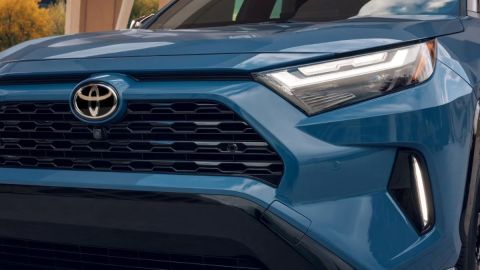
electrification It is advancing strongly in the industry, but not all brands step on the accelerator in the same way. toyotatrue to its style, continues to bet on a coexistence of technologies instead of risking everything on a single card. And that has direct consequences for one of its most popular models.
Read also: BYD warns about the Chinese electric car: what can happen to prices and brands
The RAV4an SUV that has been key to the Japanese brand’s global success, will not have a fully electric version anytime soon.
You can discover: Let your electric car be a credit card: that’s what BMW wants
The confirmation came from the mouth of Yoshinori Futonaganechief engineer of the project, in an interview with the media CarSales. His words do not leave room for too many interpretations and clearly outline the company’s roadmap.
An SUV that will remain faithful to hybridization
Toyota’s approach with the RAV4 is quite clear. The model will continue to rely on hybrid mechanics, both in its traditional format and in plug-in versions. This combination allows the brand to maintain a balance between efficiency, autonomy and ease of use without depending exclusively on the charging infrastructure.
In its most recent generation, The RAV4 offers precisely those two variants. The plug-in hybrid option, for example, exceeds 100 km of autonomy in electric modea figure that covers a good part of the daily trips without consuming fuel.

During the talk, Futonagane got straight to the point. “A purely electric mechanism is not currently being considered for our best-selling SUV”he stated. A statement that leaves out, at least for now, any possibility of seeing a 100% electric RAV4 in dealerships.
Toyota separates its electric paths
While some manufacturers transform existing models into electric ones, toyota prefers to create differentiated lines. The clearest example is the bZ4Xdeveloped specifically as an electric vehicle from the ground up.
Futonagane himself explained it in the interview. “We developed the bZ4X specifically as a vehicle to drive the development and introduction of electric vehicle technology and to meet the needs of those who want to see what possibilities this technology offers.”he stated.
This approach has also been seen in other recent releases such as the C-HR+ or the Metropolis Cruiser in some markets. Although they share names or segments with well-known models, they actually respond to different strategies within the catalog.

Technology advances, but Toyota does not rush
That doesn’t mean Toyota is ignoring the growth of electric cars. Quite the opposite. The brand recognizes that the pace of technological evolution is increasingly faster and that what seems innovative today can be left behind in a short time.
Futonagane summed it up with a rather graphic phrase: “What until a year ago was a big leap, could now be considered outdated”he assured. And he added an important nuance thinking about the future. “Many things are possible.”
That long-term look includes the development of solid-state batteries, one of the industry’s big bets. Toyota plans to introduce this technology around 2028, with ranges that could be around 1,000 km per charge and even evolve up to 1,200 km in later years.

What’s coming and what’s not
As of today, the brand has not confirmed which will be its first electric model with solid-state batteries or which new zero-emission vehicles will arrive in the short term. There are rumors about possible electric sports cars, but nothing official.
What is clear is that the RAV4 will continue to be a hybrid bastion within the range. Toyota seems comfortable with that decision and, for now, has no intention of changing it.
Continue reading:
The new Mercedes electric car aims directly at the BMW i3
Stellantis and Microsoft bring AI to Jeep, Peugeot and Ram
Rolls-Royce launches the Nightingale and it costs $8,000,000


