
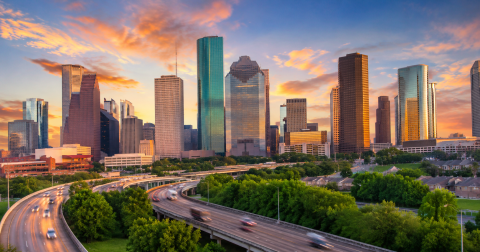
For years, Houston built a reputation as one of the great American cities where it was still possible to start over without the extreme costs of New York, Los Angeles or Miami. The appeal was clear: Texas does not charge state income taxhas a diverse economy and one of the largest Hispanic communities in the country.
But in 2026 that image needs nuances. Although Houston remains relatively more affordable than other large urban markets, it costs quite a bit more to live there than many anticipate. According to the MIT Dwelling Wage Calculator, a single adult in Harris County needs to earn more than $24 per hour to cover basic expenses; A family with two adults and two children requires significantly higher incomes to support housing, food, transportation, and child care.
You can see: The cheapest supermarkets in Texas in 2026: where money goes the most for a Latino family
How much does it cost to rent in Houston
The dwelling It remains a comparative advantage compared to other large cities, but It is no longer “cheap”.
According to real estate platforms such as Home Checklist and Zillowthe average rent for a one-bedroom apartment in Houston typically hovers around $1,200 to $1,500, while two-bedroom units can easily top $1,700 or $2,000, depending on the area.
Suburban neighborhoods can offer better pricesalthough with a clear counterpart: greater dependence on the car.

Cheapest neighborhoods in Houston to live in 2026
For those considering a move to Houston on a tight budget, location can completely change the financial equation. Although areas like Downtown, Midtown, The Heights or River Oaks concentrate some of the highest pricesthere are still neighborhoods and peripheral areas where rent is more affordable.
Among the options that tend to appear among the cheapest are Alief, an area with a strong Hispanic presence and a supply of more affordable apartments; Sharpstown, southwest of the city, historically sought after by those who prioritize price; and Gulfton, one of the most densely populated sectors with generally lower housing costs.
There are also alternatives such as Northside/Northline, with more competitive rents and relative proximity to labor corridorsin addition to suburban areas such as Pasadena, Aldine or parts of Spring Branchwhere there may be better opportunities depending on availability.
But price shouldn’t be the only criterion. In Houston, moving to a cheaper area often means longer commutes, greater dependence on the car, and, in some cases, carefully reviewing issues such as safety, access to schools, infrastructure, or flood risk. What seems like savings on rent can turn into a greater expense on transportation and time.
The expense that changes everything: transportation
Houston is a city built for driving. Unlike New York or Chicago, Public transportation has limited coverage for many work routines. This forces you to add vehicle, gasoline, maintenance and insurance costs.
And the insurance is no less: Texas is among the states where insuring a car can be especially expensiveaccording to insurance sector comparators such as Bankrate and Insurify. For many households, this expense redefines the exact budget.
You can see: How to get summer jobs in Texas: where they are looking for people right now
Electricity: a bill that can surprise
Houston’s extreme heat makes air conditioning a necessity, not a luxury. That has a direct impact on the electric billespecially in the summer, when Texas usually sees peaks in energy demand according to data from ERCOT, the state electricity operator.
For newcomers from more temperate climates, this is often one of the most underrated expenses.
How much money do you really need?
A reasonable estimate, based on real living wages and costs:
- Single person: between $4,000 and $5,500 per month.
- Couple without children: from $6,000 to $8,000.
- Family with children: easily over $8,000 to $10,000+, depending on childcare and housing.
The invisible cost
Houston continues to offer jobs and opportunities. But it also involves financial risks that many discover too late:
- Floods
- High insurance
- Long transfers
- Fuel
- Child care
- Health
Moving to Houston can still be a smart decision. But thinking that it is still a “cheap” city is not a good starting point.
Continue reading:
Social Security alerts in Texas: fraud that seeks to steal money just when payments arrive
TPS at risk: what can happen in Texas and what beneficiaries should do now
ICE raids: the states where arrests and fear among immigrants are growing


