
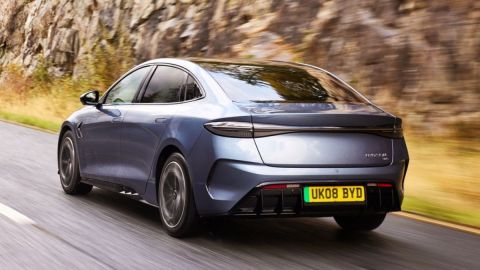
Complaints began to multiply in forums, social networks and technical services. Electric vehicle owners in China say that, after receiving remote machine updates, their cars began to offer less range and slower charging times.
Read also: Tesla revives the Roadster with a completely renewed image
The issue took on such a dimension that local authorities are already analyzing whether some brands crossed a delicate line by modifying key functions of vehicles already sold.
You can seek files from: Blunt: Europe, Asia or the US who dominates automotive luxury in America
The controversy revolves around the OTA updatesthe system that allows manufacturers to send improvements or adjustments without having to go through a workshop. What was born as a tool to correct errors or add functions is now being pointed out by thousands of users who claim to have lost up to 200 kilometers of autonomy from one day to the next.
Some of the cases exposed by Chinese state media show especially striking situations. Drivers of models approved with figures close to 500 kilometers under the CLTC cycle assure that, after the updates, they barely manage to travel less than 300 kilometers under normal conditions of use.
“Battery lock” raises suspicions
In the Chinese market there is even a term for this practice. It is known as “battery locking”. The expression refers to modifications made to the battery management system, known as BMSwhich would alter parameters related to useful capacity or fast charging.
Users maintain that these changes arrive without clear explanations and directly affect the driving experience. Some report that before They could charge their vehicle at more than 100 kWh and that, after an update, the system only allows about 80 kWh.
Added to this is a significant increase in fast charging times, which in certain cases it would have taken 40 to 70 minutes.
What is most disconcerting to many owners is that the vehicle continues to show high percentages of battery health, even when the performance is clearly inferior to the original.

The brands defend the modifications
Sector specialists believe that there could be a technical reason behind these decisions. Researcher Zhang Xiang explained that limiting the charging intensity or reducing the battery usage window would help reduce the risks of overheating and premature degradation.
The logic would be to prioritize safety and extend the useful life of the batteries, even if that means giving up autonomy and charging speed. The debate comes at an awkward time for the Chinese electric vehicle industry, especially after several recent discussions linked to ultra-fast charging and high temperatures in high-capacity batteries.
China tightens regulation on OTA updates
The growth of complaints led to China’s Ministry of Industry and Information Technology and the State Administration for Market Regulation to take action. New rules for remote updates applied to electric vehicles were approved in March.
Among the provisions is the prohibition of performing battery locks without previously informing the user, in addition to preventing mandatory silent updates or machine changes used to avoid official review campaigns.
Meanwhile, rumors also circulated about alleged investigations against eight manufacturers, although the Chinese Association of Automobile Manufacturers ended up denying these versions.
Several companies quickly came out to defend themselves. BYD, Tesla and Zeekr They denied having applied hidden restrictions through machines and some even warned that they could take legal action against those who spread these accusations.
Continue reading:
Mercedes-Benz recalls more than 144,000 cars due to digital failure
If you didn’t want it, now you do: Kia EV6 2026 lowered its price
Amazing: Bugatti created a W16 Mistral inspired by a dragonfly


