
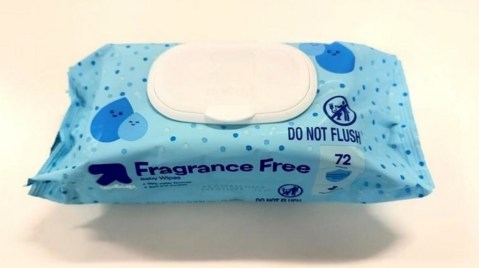
The Target department store chain decided to withdraw Up & Up brand baby wipes from the market due to possible contamination with bacteria that can affect the health of the little ones. The affected wipes include both unscented and fresh cucumber scented versions.
Specifically, the products involved are:
- Fragrance-free wipes. Available in packages of 20, 72, 216, 800 and 1200 units.
- Fresh cucumber scented wipes. Available in packages of 72, 216 and 800 units.
These products were sold in Target’s physical and online stores in the United States.
According to the statement from Target and the Food and Drug Administration (FDA), the presence of bacteria such as Burkholderia cepacia and Burkholderia gladioli represents a significant risk, especially for newborns and young children, who may face serious infections due to a still developing immune system.
Instructions for consumers
Target recommends customers immediately stop using affected wipes and return them to any Target store for a full refund. In addition, consumer assistance is offered through its telephone line, available every day.
This recall is a reminder of the importance of safety in products intended for babies and the need to be alert to possible contamination.
Bacterial contamination of babies
infections due to Burkholderia cepacia advanced and Burkholderia gladioli in babies they are rare, but when they occur, the symptoms are usually serious and are mainly related to the respiratory system and the presence of sepsis.
In babies infected with Burkholderia cepacia advancedinitial symptoms may include low intensity feverwhich quickly progresses to more serious conditions such as pneumonia and others lung disorders which in some cases can be fatal.
In neonates, especially those premature or with bronchopulmonary dysplasia, it has been observed respiratory distress syndromewhich requires CPAP support, along with fever and desaturation episodes of oxygen. They can also present inadequate evolution at the respiratory level and new recurrent febrile episodes.
For Burkholderia gladioliinfection in neonates is mainly associated with bacteremia (bloodstream infection). Infected babies, especially premature ones, often have fever, suffocation, pneumonia, hyperbilirubinemia and, in some cases, necrotizing enterocolitis. Unlike other serious infections, most isolates of B. gladioli They are sensitive to common antibiotics and do not always lead to severe consequences if treated properly.
Overall, both pathogens can cause signs of sepsis and, in more serious infections, multiorgan failureespecially in babies with weakened immune systems or in neonatal intensive care settings. There are no totally specific clinical or laboratory characteristics that differentiate these infections from other bacteremias in children, which makes confirmatory microbiological diagnosis important.
You may also be interested in:
· A necessary change in sun protection: FDA approves a new ingredient used for years in Europe
· A necessary change in sun protection: FDA approves a new ingredient used for years in Europe
· Study reveals that omega-3 supplements could be linked to cognitive decline


