
There are now more active conflicts than in any period since World War II. Residents of Iceland, New Zealand and elsewhere explain the qualities that make their nations so peaceful.
The world is less peaceful than last year, according to the latest World Peace Index, prepared by the Institute for Economics and Peace (IEP) based in Australia.
Overall peace levels deteriorated in ninety-nine countries, marking the twelfth consecutive year of decline globally.
However, in the midst of this unfavorable panorama, a small group of nations continues to stand out positively.
“Despite this catastrophic decline, the situation has not really affected the countries at the top of the list,” said Steve Killelea, founder and CEO of the IEP, the body that created the index in 2007.
The index ranks 163 nations based on 23 indicators, ranging from military spending and ongoing conflicts to homicide rates and perceptions of security.
The best performing countries tend to combine low levels of violence with effectively functioning institutions, high social trust, good relations with neighboring countries and a high quality of life.
We spoke with residents of the five safest countries in the world to find out what it feels like to live with that security on a daily basis, what helps maintain it, and how travelers can experience a little of that calm and stability, too.
Top 10 countries in the 2026 World Peace Index
1. Iceland
2. New Zealand
3. Switzerland
4. Slovenia
5. Ireland
6. Austria
7. Portugal
8. Singapore
9. Finland
10. Japan
1. Iceland
Iceland has topped the index since 2008 and remains the safest country in the world for the 19th year in a row.
It improved 2% in 2026, driven by a marked decline in violent protests, and continues to rank highly for security, low levels of conflict, and low militarization.

“In Iceland, peace surrounds us in nature, but it is also a conscious choice rooted in our cohesive communities,” said Oddný Arnarsdóttir, director of Scurry to Iceland.
She attributes this to a deep commitment to equality – including gender parity, where Iceland consistently ranks among the world leaders – as well as strong public services and the widespread use of renewable energy.
That commitment goes beyond public policies; Residents highlight a strong sense of social cohesion and shared responsibility.
“We are very aware of how lucky we are to enjoy this tranquility,” said Arnarsdóttir.
“This reinforces the importance of maintaining an open and inclusive society.”
Its remote location also plays an important role.
“Iceland’s geographical isolation means the country is less affected by global tensions,” explained Eyrún Aníta Gylfadóttir, marketing manager at the Rangá hotel.
“The vast open landscapes, towering mountains, clean air and abundant fresh water are key elements to the quality of life here.”
To experience the leisurely pace of Iceland, Arnarsdóttir recommends slowing down and spending time outdoors, rather than rushing to visit attraction after attraction.
Experiencing Icelandic bathing culture should be high on your list of activities.
Iceland has more than 120 geothermal pools, ranging from luxurious spas to neighborhood pools where locals gather year-round.
“Experiencing the calm of Iceland is closely linked to well-being,” said Arnarsdóttir, “whether through the culture of geothermal baths, time spent in contact with nature, or simply having space to unwind.”
Visitors should also make sure they venture beyond the country’s best-known attractions.
Arnarsdóttir highlights the more than 220 museums spread across Iceland, including the National Museum in the capital and the Sea Monster Museum of Iceland in the Westfjords.
“I love our quirky museums,” he said. “These spaces help spread local stories and traditions, while encouraging people to travel more and see different areas of Iceland.”
2. New Zealand

New Zealand is in second place (after being third in 2025) and is the safest country in the Asia-Pacific region, recording the lowest score in the area for ongoing conflicts.
Its improvement is largely due to a reduction in weapons imports, and it remains one of the safest and least militarized nations in the world.
Much of that peace is due to geography.
“Being so far from everything means New Zealand has largely managed to avoid the geopolitical chaos that drags other nations into conflict,” said Warwick Woodley, a New Zealand citizen and founder of NZ Golden Visa.
However, he also attributes this fact to culture: people tend to be calm and direct, and — as he says — “they are more interested in moving forward with their affairs than in looking for problems or generating discord.”
Here, security is something so routine that it is rarely noticed.
“Most people don’t think about it much, which is probably the best indication that, as of now, it’s not a cause for concern,” Woodley said.
“Guns are not part of everyday life here and after what happened in Christchurch (referring to the mass shootings at two mosques in 2019), the laws were tightened even more.”
The neighborhoods continue to function as such, he added, places where neighbors know each other and care for each other.
“That sense of mutual responsibility is essential in a country of five million inhabitants, where it is difficult to go unnoticed.”
The low population density also facilitates access to nature.
“Mountains, beaches and hiking trails are all within reach, depending on where you are,” Woodley said.
“You don’t have the feeling that life is constantly slipping through your fingers, as it does in some bigger, busier countries.”
3. Switzerland

Jumping from fifth place last year to third in 2026, Switzerland combines low crime rates with a long-standing policy of military neutrality, helping it remain one of the safest countries in the world.
“Here, people seem willing to give others their space,” said Cornelia Choe, a Geneva-based executive coach and author.
“That gives a sense of confidence: the certainty that, for the most part, people are going to do the right thing and that everyday life works, to a large extent, as it should.”
That trust tends to manifest itself in everyday transactions.
Choe remembers losing his wallet twice in Switzerland. The first time, a stranger mailed it to him a few days later with the cash still inside.
Years later, after he dropped his credit card at a train station, the person who found it contacted his bank directly to cancel it and protect it from possible fraud.
“They are small details, but they leave a lasting mark and generate a feeling of security that is priceless,” he said.
To appreciate the sense of peace here, visitors should embrace Switzerland’s deep-rooted work-life balance. For example, many businesses close for two hours in the middle of the day.
It is also worth valuing the country’s four national languages and their marked regional identities.
“Societies don’t have to agree on everything to become stronger,” Choe said.
“I have observed a tendency to seek agreements and practical solutions that allow people to move forward together. Perhaps that is ultimately what peace is: not the absence of differences, but a shared commitment to finding a way to live well with them.”
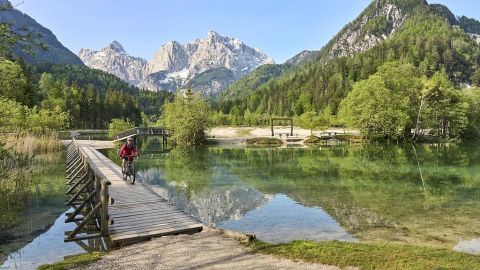
4. Slovenia

Slovenia’s strong performance, appearing in the index’s top five for the first time, is based on low military spending and high security levels.
“Slovenes greatly value community and spend a lot of time in contact with nature; I think that gives us calm and stability,” said Jerneja Zver, Ljubljana resident and head of Eastern Europe operations for Dauntless Fade.
Zver says he spends most weekends outdoors, whether hiking, biking or skiing, or hanging out with friends and family.
According to her, the strong cultural emphasis on work-life balance leaves more room to cultivate relationships that foster a sense of belonging.
“At a time when conflict and uncertainty affect many parts of the world, I feel very lucky to call Slovenia my home,” Zver said.
“I value the little things that I perhaps took for granted before, knowing that I can go about my daily life safely and without fear.”
To appreciate everything the country has to offer, Zver suggests dedicating more than a straight forward weekend to Ljubljana. “Come spend a week,” he said.
This could include doing rafting whitewater on the Soča River, visit the waterfalls in the Vintgar Gorge near Bled, or cycle through the country’s mountain grasslands.
“Whatever you do in Slovenia, you will be amazed by the warm hospitality of its people and by its stunning landscapes and nature,” said Zver. “And, of course, for its excellent gastronomy.”
5. Ireland

Ranked fifth, Ireland scores highly thanks to its low levels of violence and little involvement in international conflicts.
In a country marked by a turbulent past, that sense of security is not taken for granted.
“Ireland’s historical experience as a nation makes its people acutely aware of the dangers of prejudice and the importance of being generous and welcoming to others,” said Didi Ronan, founder of Native, a regenerative hotel in West Cork.
Ronan traces this culture of hospitality to the Brehon laws, which governed Ireland for much of the first millennium and established the obligation to offer food and shelter to strangers and travelers.
“We carry it in our DNA,” he said.
Ireland’s tradition of neutrality gives an international dimension to that sense of peace, as the country does not participate in foreign wars or military alliances.
“In a time of global volatility and uncertainty, it is comforting to find ourselves in a to a remote island in the Atlantic, surrounded by good music, walks and books,” said Ronan.
“We value this privilege, given the great amount of suffering and injustice endured by so many people in the trusty world, a reality that resonates with our own national experience.”
For visitors, the quickest way to connect with the quieter side of Ireland is through nature, whether it’s a walk in the woods or a coastal adventure.
Ronan recommends taking the ferry to Cape Sure Island, exploring the medieval ruins of Three Castle Head or visiting the Drombeg stone circle near Glandore.
This is an adaptation of a story originally published in English by BBC Fade. If you want to access that version, do click here.

click here to want more stories from BBC News World.
Subscribe here to our new newsletter to receive a selection of our best content of the week every Friday.
You can also follow us on YouTube, instagram, TikTok, x, Facebook and in our whatsapp channel.
And remember that you can receive notifications in our app. Download the latest version and activate them.
- What Bhutan is like, the remote Himalayan kingdom that is now opening up to the world
- The Republic of Slowjamastan, the micronation founded in California by an eccentric “sultan” that already has 25,000 citizens


