
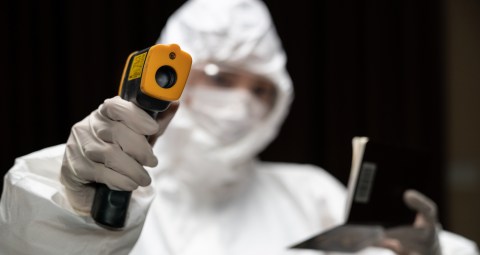
While the Democratic Republic of the Congo has reported 598 confirmed cases of Ebola, with 115 deaths, and the World Health Organization (WHO) has warned that the risk of transmission is considered “very high,” federal authorities in the United States are seeking to have Europe impose more restrictions on travelers from Central Africa.
To this, Belgium has rejected the demands. The European Commission notes that the risk to Europe is low and there is no need for additional measures.
All within the framework of the beginning of the 2026 Soccer World Cup, jointly in the USA, Mexico and Canada. Until now, restrictions have only been imposed on people who have been in three specific countries: the Democratic Republic of the Congo (DRC), Uganda and South Sudandue to the Ebola outbreak declared in May.
How the Bundibugiyo strain of Ebola affects
The mortality rate of the Bundibugyo Ebola virus is between 20% and 30%according to experts. This figure is considerably higher than that of the Zaire strain, which can reach much higher lethality percentages, even reaching 90% in some shoots. Some recent reports indicate that Bundibugyo mortality may exceed the 30% in certain situations, which represents a serious concern for health systems.
Symptoms and clinical picture
Clinically, Bundibugyo It looks very similar to the Ebola of other variants. The onset is sudden, with high fever, muscle pain, sore throat, intense fatigue and headaches. Vomiting, diarrhea, skin rashes, and serious complications related to liver and kidney function may also occur. The famous difference is that the bleeding appears to be less frequent with Bundibugyo than in other Ebola outbreaks, although they can appear in advanced stages.
The famous problem: lack of vaccines
While the Zaire strain already has vaccines and specific treatmentsBundibugyo still does not have approved immunization. This lack of specific prevention means that healthcare workers and family members of patients face the greatest risk, with a high rate of infection among them.
Transmission and frequency
Bundibugyo is less common than other strains of Ebola and causes fewer waves of casesso its treatment is not prioritized in vaccine research. The virus spreads through direct contact with bodily fluids of affected people, requiring very direct contact.
Case identification and confirmation process
The process to identify and confirm new cases of Ebola follows these key steps:
Identification of the suspected case
- Initial screening: In areas with circulation of the virus, all people undergo screening at the first point of contact with a health center.
- Clinical evaluation: Sudden fever is identified along with symptoms such as severe weakness, muscle pain, headache, sore throat, vomiting, diarrhea or bleeding.
- Epidemiological evaluation: It is verified if there is contact with confirmed cases, recent trips to infected countries (last 21 days) or exposure to wild animal tissues.
- Urgent declaration: Any suspicion must be immediately declared to the epidemiology system.
Immediate measures
- Isolation: The patient is placed in immediate isolation while awaiting results.
- Sampling: Biological samples (blood) are collected with appropriate personal protective equipment.
- Contact Search: Contacts are identified and classified as high/low risk for 21-day follow-up.
confirmed case
At least one method of detecting viral RNA by RT-PCR, specific antibodies, viral antigens or virus isolation is required.
Post confirmation
- Notification: The investigation form is sent to Epidemiology within forty eight hours.
- Treatment: Supportive treatment and infection control measures are continued.
- Contact tracking: Daily monitoring of temperature and symptoms for 21 days.
You may also be interested in:
· Travelers to the United States from Congo, Uganda and Sudan for the World Cup will be under health surveillance for Ebola
· What does the declaration of a global health emergency due to Ebola imply?
· WHO declares Ebola outbreak in Democratic Republic of the Congo a global emergency


