

By Deutsche Welle
Although Washington and Tehran are debating a peace agreement through mediating countries such as Pakistan, this week Reciprocal attacks have taken place. The US first justified its claim for the downing of a helicopter in the Strait of Hormuz on Tuesday, June 9, 2026.
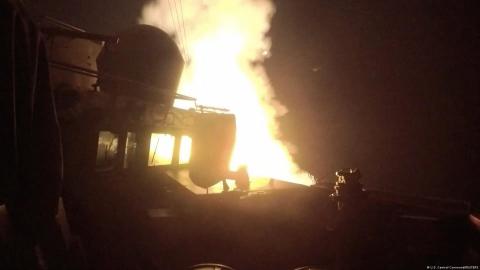
A day later, the US Army launched new attacks against “multiple targets” in Iran as a “response to aggression” by the Islamic Republic. The Iranian Revolutionary Guard, for its part, responded by launching drones and missiles at US bases in Bahrain, Kuwait and Jordan early Thursday, the Fars news agency reported.
Closure of the Strait of Hormuz
In the midst of the attacks, The Iranian Army announced the closure of the Strait of Hormuz “completely” to all types of vesselsagainst whom he warned that he will shoot if they try to cross the road, key to global crude oil trade.
“The Strait of Hormuz has been completely closed to all types of vessels, including commercial ships,” announced the Khatam al Anbiya Central Headquarters in a statement reported by the Tasnim agency.
Iran threats
This point was denied by the United States, which assures that commercial ships continue to cross Hormuz. “Tonight, commercial vessels continue to transit in and out of the Strait of Hormuz,” US Central Command (Centcom) said in a brief statement.
For his part, the commander of the Aerospace Force of the Iranian Islamic Revolutionary Guard Corps, Majid Mousavi, has threatened the United States: “Do you think you can turn the sacred Strait of Hormuz into an unsafe place? We will turn the entire region into hell for you”Mousavi noted, according to the Iranian media Press Television.


