
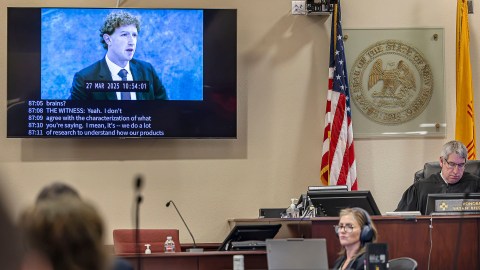
A California judge rejected requests from Google and Meta to repeat a trial in which both companies were found liable for the design of platforms considered harmful to young users, maintaining in force a verdict that orders them to pay millions of dollars in damages.
The decision represents a new setback for two of the most influential technology companies in the country, amid growing scrutiny over the impact of social media on the mental health of children and adolescents.
Los Angeles Superior Court Judge Carolyn Kuhl denied the motions filed by Meta Platforms and YouTubeowned by Google, with which they sought to annul the ruling issued by a jury and obtain a new trial.
The lawsuit was filed by a woman who claimed to have developed an addiction to Instagram and YouTube since she was a minor. According to their argument, both platforms were designed with mechanisms designed to excessively capture and maintain the attention of users, especially among minors.
Last March, a jury concluded that the companies were negligent and determined that they should pay total compensation close to $6 million dollars. Of the established amount, Meta was considered responsible for 70% of the damages, while YouTube assumed the remaining 30%.
Judge Carolyn Kuhl denied requests from Meta and Google/YouTube to vacate the verdict and order a new trial, upholding the jury’s ruling, according to a court document.#Google #Meta https://t.co/kMyMDM7ygq
— Ángel Metropolitano (@angelmetropoli) June 11, 2026
Section 230 Did Not Protect Businesses
One of the main defense arguments presented by Meta and Google was based on Section 230 of the Communications Decency Act, a federal rule that generally protects digital platforms from lawsuits related to content published by third parties.
However, Judge Kuhl determined that the case did not revolve around the content shared by users, but rather the design decisions implemented by the companies. In court documents, the judge noted that there was sufficient evidence for the jury to conclude that the plaintiff suffered damages due to specific features of Instagram, regardless of the content she may have viewed within the platform.
He also highlighted that during the trial the jury was repeatedly instructed not to base their analysis on user-generated posts or messages, but rather on the design elements that supposedly encouraged compulsive use of the applications.
Companies anticipate appeals
After learning of the decision, Meta reiterated his disagreement with the ruling and announced that he will continue to challenge the resolution at higher levels. A spokesperson for the company maintained that the legal theory presented by the plaintiffs seeks to circumvent the protections granted by Section 230 and the First Amendment of the Constitution, so they hope that the sentence will be reversed during the appeal process.
Google also announced its intention to appeal the court decision. For his part, Imprint Lanier, the plaintiff’s attorney, stated that the result was foreseeable due to the amount of evidence presented during the process.
The case joins a series of lawsuits faced by the main technology platforms for alleged damages to minors. In recent years, authorities, legislators and civil organizations have increased pressure on companies to assume greater responsibility for the design and operation of their digital services, especially those aimed at or accessible to children and adolescents.
Keep reading:
- Supreme Court rejects Meta’s appeal and allows a lawsuit in Vermont for addiction to his social networks
- Meta faces lawsuit in New Mexico that could force changes to its platforms
- La Opinión Hoy: Meta and Google found guilty of addiction to social networks


