

By Deutsche Welle
Nearly 500 cases of Ebola virus infection have been confirmed to date in Central Africawhere concern is growing about the magnitude that the hemorrhagic fever epidemic could reach, according to the latest WHO report issued on Saturday (06/06/2026).
In its daily report, the World Health Organization recorded 452 confirmed cases, including 82 deaths, in the Democratic Republic of the Congo (DRC), where the epidemic was declared three weeks ago.
However, This Saturday, the DRC authorities raised the confirmed cases to 488, with 86 deaths.
In neighboring Uganda, 19 cases have been confirmed, of which two have died.
The rise in numbers comes as warnings multiply that the current epidemic, which the WHO has called a public health emergency of international concern, could rival the record-breaking 2014/16 epidemic, which caused more than 11,000 deaths in West Africa.
In the absence of strong public health measures, “that level is possible,” declared Jason Asher, from the epidemic prediction and analysis department of the Centers for Disease Control and Prevention (CDC, the main US health agency).
Ebola, which is transmitted by close contact and through body fluids, has killed more than 15,000 people in Africa in the past 50 years.
The actual epidemic was declared on May 15 in the northeast of the Democratic Republic of the Congo, but it is believed that the virus had already been spreading silently for some time.
WHO: “It is a serious epidemic”
There is no vaccine or approved treatment against the rare strain of Ebola responsible for the current epidemic, called Bundibugyo.
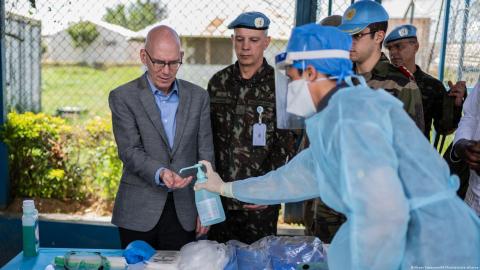
The WHO and the African Centers for Disease Control and Prevention (Africa CDC) launched on Friday a decision of 518 million dollars to combat the epidemic over the next six months, with special emphasis on strengthening surveillance, laboratory testing and infection prevention.
“The epidemic is advancing rapidly and we are still lagging behind”WHO General Director Tedros Adhanom Ghebreyesus declared to the press on Friday.
“This is a serious epidemic and we know how to contain it, but we must act quickly and together,” he added.


