
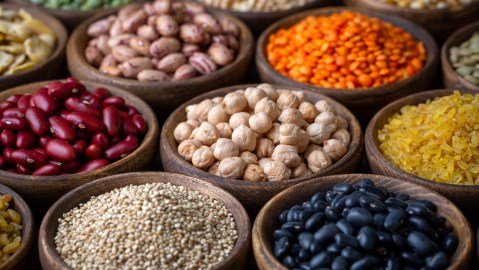
The increase in interest in legumes reflects a change in consumer perception. As food prices rise, legumes, traditionally considered inexpensive, are making a comeback in Americans’ diets.
This change has led to the popularity of accounts like BeanTok and the formation of groups like “Leguminati”, observes the National Public Radio (NPR).
“We are certainly experiencing a renaissance,” said Tim McGreevy, executive director of USA Pulses, the trade association for the legume industry, which includes dried beans, lentils, chickpeas and dried peas.
“Legumes can make you feel good. That’s their power,” he reaffirms.
Legumes, rich in fiber and protein, are valued not only for their low cost, but also for their multiple health benefits. Research indicates that its consumption can help regulate blood sugar and improve intestinal health. However, its reputation as a “musical fruit” remains an obstacle to its overall acceptance.
Emerging trends in bean consumption
Renewed interest in legumes has been driven by several trends, including rising meat prices and the movement toward more sustainable diets.
Legumes, which are known for their high fiber content, can compensate for a nutrient that is often lacking in the American diet, specialists point out. In this sense, a study published in Latest Trends in Nutrition revealed that only 7.4% of American adults meet the recommended daily amount of fiber.
Companies like Rancho Gordo have found success selling previously underrated varieties of legumes, and have created communities around their consumption.
Initiatives to increase legume consumption
Organizations like USA Pulses aim to increase the production and consumption of legumes in the US by 2030.
These initiatives include public awareness campaigns and changes in dietary guidelines, focusing on the integration of legumes into everyday meals and processed food lists.
Experts say
- Alma Palau, president of the Total Council of Dietitians-Nutritionists of Spain, insists on “reestablishing legumes as a part of the Mediterranean diet.”
- Dietitian-nutritionist Eduard Baladia points out that “it has always been said that you should eat legumes 2-3 times a week, but studies say that it is better to eat more than 4 or even daily, to obtain truly visible health results.”
- Nutritionist Katherine García Malpartida highlights that they have demonstrated benefits for cardiovascular health and the prevention of colon and rectal cancer, diabetes and arteriosclerosis.
- Linia Patel, spokesperson for the British Dietetic Association, explains that its high fiber and protein content helps stabilize blood sugar, prolong satiety and thus contribute to weight adjustment. Patel estimates that increasing the daily amount of legumes, ideally “doubling the usual consumption to 30 grams” per day, can generate concrete improvements due to their contribution of fiber, protein and essential micronutrients.
- The internist and nutrition specialist José Alejandro Medina remembers that “what makes us fat is not the legume or the hamburger, but the imbalance between the energy requirement and what we eat.”
- Other experts point out that gas or bloating can be reduced with techniques such as adequate soaking, good cooking and progressively increasing consumption, maintaining the benefits without so much discomfort.
Nutritional differences between different types of legumes
There are nutritional differences between legumes, although they all share a similar pass: they provide vegetable proteincomplex carbohydrates, fiber, B vitamins and minerals such as iron, magnesium and potassium.
Main differences
- Soybeans and peanuts: They are the “fattest” of the group, with more healthy lipids and more protein; Soybeans stand out for their higher profile in vegetable protein and unsaturated fats.
- Chickpeas: They tend to have more starch and also a good amount of protein and fiber; In addition, they provide lipids in a greater proportion than many other dry legumes.
- Lentils, beans and beans: They usually stand out for their combination of protein, fiber and minerals, with less fat than soy or peanuts.
- Peas: They tend to have more vitamins such as A, C and K, and in some cases fewer calories, due to their higher water content.
- broad beans: They provide fiber, carbohydrates, minerals and some B vitamins, with a balanced profile, but less specific in fat than soy or peanuts.
What changes the most?
- The most important difference is usually three things: amount of protein, amount of fat and type of carbohydrate.
- Oilseed legumes, such as soybeans and peanuts, provide more fat and energy; Common dried foods, such as lentils, chickpeas and beans, provide more complex carbohydrates and fiber; and some, like peas, stand out more for specific micronutrients.
Practical summary
- If you search more proteinsoybeans are usually the most prominent.
- If you search more satiety and fiberlentils, chickpeas and beans are very good options.
- If you search more healthy fatsoy and peanuts stand out.
- If you search more specific vitaminspeas have an interesting profile.
Popular recipes using legumes
Legumes are now the protagonists in many modern and traditional recipes, both in hot and cold dishes. Below I leave you a list of popular recipes where legumes are the main ingredient.
Classic stews and stews
- Stewed lentils: Lentil stew with vegetables, chorizo or bacon, very typical in Spain and Latin America.
- Chickpeas with spinach and potatoes: Creamy stew where chickpeas are the pass and are accompanied by vegetables.
- White beans with chorizo or “white beans with chorizo”: Bean stew with chorizo and vegetables, very current in Spanish cuisine.
Legume salads
- Chickpea salad: Mixture of cooked chickpeas with raw vegetables (onion, pepper, tomato, cucumber), olive oil and lemon.
- Lentil salad with arugula and fruits (e.g. raspberries or apple), glorious for fresh, nutritious meals.
- Empedrat: Catalan salad with beans, cod or tuna, olives, tomato and vegetables, very rich in vegetable protein.
Arabic and Mediterranean dishes
- Hummus: Cold cream of crushed chickpeas, with tahini, lemon, garlic and olive oil; one of the best-known legume dishes in the world.
- Falafel: Fried or baked croquettes made with soaked and crushed chickpeas, spices and herbs, widely used in healthy fast food.
Vegetable burgers and meatballs
- Vegetable burgers: Vegan burgers made mostly with lentils, chickpeas or beans, mixed with onion, garlic, spices and a little flour to bind.
- Legume meatballs: Similar to burgers, lentils or beans are used as a pass for vegetable protein balls, which are then fried or cooked in sauce.
Tacos and “fast” foods
- Lentil tacos al pastorBlack bean tacos or chickpea tacos are very popular in vegan versions, using lentils or beans as the main filling.
- Chickpea Milanese: Vegetarian version where the meat is replaced by a flour and chickpea puree dough, breaded and fried or baked.
Other popular tips
- Sautéed lentils or beans with vegetables (mushrooms, pepper, onion, zucchini), very quick and designed to include legumes in light dishes.
- Desserts or desserts with crushed cooked lentilswhere the legume is hidden in the dough to provide more protein without altering the flavor too much.
Keep reading:
· The cucumber and the secrets that science never stops revealing
· Lentils with vitamin C: a nutritious and effective combination
· Nutritional benefits of sardine, which is why it is considered a “superfood”


