
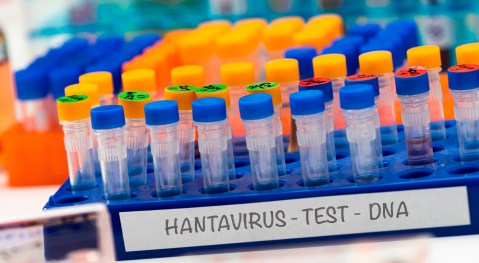
The World Health Organization (WHO) stated that hantavirus is most contagious in the initial stages of the disease. Olivier le Polain, head of the WHO epidemiological unit, stressed the importance of quarantine for suspected cases, given that people can be contagious from the beginning of the disease.
“If we impose or recommend quarantine It is because people are contagious from the very beginning of the disease“, declared Le Polain during a live connection on various social media platforms.
“It is during the first days, and even from the first moments of the illness, when contagiousness is greater“, he indicated.
The hantavirus outbreak aboard the MV Hondius cruise ship has raised global concerns. The WHO clarified that, although the situation is serious, it does not compare to the COVID-19 pandemic. Since the ship set sail in Ushuaia (Argentina), three passengers have died from this rare virus.
Surveillance and prevention
The WHO emphasizes the need for continuous surveillance in the event of new cases. With a specific incubation period, experts urge identifying, isolating and caring for people who present initial symptoms.
“Due to this incubation period, we can expect to see new cases appear in the coming daysand even next week, and that is why we must remain vigilant and ensure that, upon the appearance of the first signs and symptoms, affected people are identified, isolated and cared for,” added the WHO epidemiologist.
The seriousness of the situation requires a proactive approach to prevention and keeping an eye fixed on infections.
Courtesy: Clarion
Passengers return to their countries of origin
It was also known that the last remaining passengers on a cruise ship affected by the deadly hantavirus outbreak disembarked on May 11 and boarded flights to more than 20 countries to enter quarantine. A French woman was the last to be confirmed as infected, while an American was suspected of infection after initial tests, he reported. Associated Press (AP).
Passengers began returning home aboard military and government aircraft after the MV Hondius docked in the Canary Islands. Deepest wearing full protective suits and respiratory masks escorted the travelers from the ship to the coast of Tenerife, an operation that concluded.
Tedros Adhanom Ghebreyesus, general director of the WHO, said that if they had stayed on the ship longer, the situation could have been difficult.
9 cases of hantavirus detected
So far nine cases of hantavirus have been detected. Three have died and six people with confirmed or suspected cases of hantavirus are in quarantine, according to the WHO.
Le Polain noted that “a person from the ship who was repatriated and whose laboratory result was inconclusive is not included in this report.”
Unpublished case
Health authorities stated that this is the first hantavirus outbreak on a cruise ship. While there is no cure or vaccine for hantavirus, the WHO notes that early detection and treatment improves survival rates.
The ship’s captain, Jan Dobrogowski, issued a video message praising the passengers and crew for their bravery and perseverance, and asked for respect for his privacy, he said. AP.
“I couldn’t imagine sailing under these circumstances with a better group of people, both passengers and crew,” he said.
Security protocols
The passengers of the cruise ship affected by hantavirus have returned to their countries of origin after a coordinated operation from Tenerife (Spain). Strict health protocols will now be followed to guarantee your safety and prevent infections.
Main protocols. Isolation and medical monitoring measures are maintained in receiving countries, with mandatory tests for hantavirus and selective quarantines based on symptoms.
International coordination. The Government of Spain coordinated the transfers with health verification protocols during the repatriation flights. Local authorities will assume long-term monitoring, similar to voluntary returns managed by UNHCR in other contexts.
Background in hantavirus cases
There have been several major hantavirus outbreaks, and the best-known ones help to see how these crises are managed: close surveillance, case isolation, contact tracing, and measures to control rodents and clean up contaminated environments.
Historical outbreaks
- During the Korean War, in the 1950s, the so-called Korean hemorrhagic fever was described, one of the first major conditions associated with hantavirus, with thousands of soldiers affected.
- In 1993, the Four Corners outbreak in the United States led to the discovery of hantavirus pulmonary syndrome in the New World; The deer mouse was later identified as a reservoir, and the episode changed public health protocols in America.
- In 2012, the outbreak in Yosemite, California, required tracking and notifying more than 10,000 exposed people, in addition to redesigning cabins and reinforcing cleaning standards to avoid aerosols of rodent excrement.
- In 2014, an outbreak in Chile showed transmission between people in the home environment and in healthcare workers, which led to reinforced hospital precautions and monitoring of contacts for 42 days.
- In 2018-2019, the outbreak in Epuyén, Argentina, was especially important because it confirmed human-to-human transmission of the Andes virus; There were 34 cases and 11 deaths, and selective isolation of healthy contacts was applied.
How they handled themselves
- Management usually combines three fronts: early clinical care, contact tracing and withhold an eye fixed on the environment.
- When there is transmission between people, as in the Andes virus, isolation, monitoring of those exposed, and protection of health personnel are reinforced.
- When the problem is environmental, as in Yosemite, authorities prioritize safe cleaning, disinfection before sweeping or vacuuming, and changes in infrastructure to prevent rodent harborages.
common pattern
- The most repeated lesson is that hantavirus outbreaks are not controlled only by treating sick people; Exposure to rodents must also be cut and react quickly to any chain of transmission.
- In South America, where the Andes virus can spread between people, contact tracing is especially important.
· What happens inside the cruise ship affected by hantavirus: is there a risk that it could spread?
· Hantavirus reappeared: what is this outbreak about?
· They nickname it “Cicada”: COVID-19 variant detected in California


