
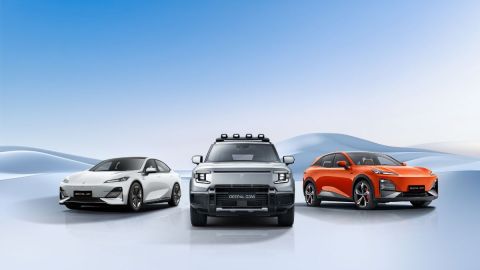
The race to find alternatives to traditional electric cars has just added a new chapter in China. Deepalthe group’s top fee brand Changanofficially began the commercialization of its first vehicle powered by hydrogen, a technology that until recently seemed reserved almost exclusively for buses, trucks and heavy transport.
Read also: “Luxury is in you”, the campaign with Hispanic seal of Genesis
The presentation took place in the middle of the Beijing Auto Show and it quickly attracted attention because the company decided to apply this system to a family sedan, moving away from the commercial approach that this type of engine usually has. The move also makes clear that several Chinese automakers want to explore paths other than conventional batteries.
You can gain out about: Opel Corsa GSE, the electric sports car that the US will not see
Depending on the brand, This new model promises a range of more than 700 kilometers under the Chinese CLTC cycle.in addition to considerably faster charging times compared to many current electric vehicles.
A project that seeks to open the way
The system initially debuted in the Deepal SL03a sedan that now becomes one of the few hydrogen cars developed by a Chinese firm for the passenger market.
During the official presentation, Yu Cheng, full director of Global Product Development at Deepal, highlighted the level of progress achieved by the company. “The company’s first-generation fuel cell system is now available for sale. Our measurements show that its performance exceeds industry standards by more than 10%”stated the executive.
The brand also confirmed that it is already working on a second generation of this technology. The objective is to improve total efficiency and, above all, reduce production costs to make it more accessible in the coming years. According to the company’s plans, the new fuel cells and storage systems should arrive around 2027.
Hydrogen begins to gain space
Although it remains a minority technology compared to battery electric vehicles, hydrogen is beginning to show signs of growth in China. Reports from specialized media assure that more than 30,000 vehicles powered by hydrogen in that country, with a significant percentage of components developed locally.
Until now, most focused on commercial fleets, especially trucks and buses. However, Deepal wants to take advantage of this infrastructure to open space in the private car segment.

The figures show that it is still a small, although growing, market. Deepal sold 31,742 vehicles in March within the Chinese market, registering an increase of 69.4%. At the same time, during that same month, only 100 hydrogen vehicles among all brands.
Even so, the panorama changes when looking at the annual accumulated. In all of 2025, 8,154 hydrogen-powered units were delivered in China, which represented an increase of 41% compared to the previous period.
How does a hydrogen car work?
The significant difference compared to a conventional electric vehicle is in the way it obtains energy. While a traditional electric car needs to connect directly to an external source to recharge its batteries, a hydrogen car generates electricity by itself while driving.
The system uses hydrogen stored in pressurized tanks and combines it with oxygen within a fuel cell. From this chemical reaction, the electricity that powers the electric motors is produced.
Thanks to this process, the vehicle can offer high ranges and much faster refueling than a traditional electric vehicle, two points that continue to be key for many drivers today.
Continue reading:
Audi rescues the legendary Auto Union Lucca after 91 years
Tesla suffers sharp drop in sales in an important country
Take advantage! Ford discounts thousands of dollars on 2025 and 2026 models


