
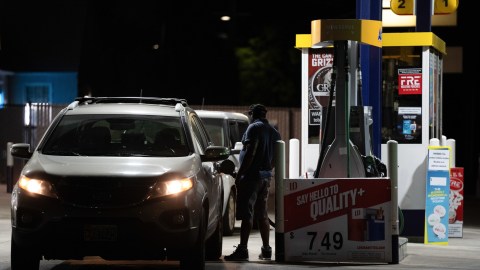
Latinos in the United States consider that the American Dream is increasingly unattainabledue to the economic situation and the high price of various products, such as gasoline, blaming President Donald Trump and Congress for this.
“83% [de los latinos] affirms that elected officials, including the President and members of Congress, have at least some influence over their personal financial situation,” reveals a recent survey by Voto Latino and Murmuration.
65% believe that even people who work hard have difficulty progressingwhile 77% affirm that having your own home and a comfortable retirement are no longer realistic.
The economic situation of this population has led them to make difficult decisions, since 47% reveal that they have “reduced their trips” or have stopped using the cardue to the increase in the price of gasoline, which reached a record not seen since 2022, with $4.3 dollars per gallon on average nationwide, according to the American Automobile Association (AAA).
“Rising costs force Latino families to make unthinkable decisions every day. From gas to food to rent, the pressure is relentless. For many, the promise that hard work leads to stability is fading. When people cut back on essentials just to pay for gas, it indicates a deeper problem in our economy,” said Beatriz López, executive director of Voto Latino.
López referred to the rulers, as a hope among Latinos, to act to reduce the economic impact of current policies.
“Latinos are watching and expect leaders to act urgently to reduce costsstrengthen the financial stability of working families and restore the path to the American Dream,” he added.
The country’s economic situation faces complications due to President Trump’s economic policies, such as his imposition of tariffs on dozens of countries and the war he started with Iran that has brought the price of oil to $126 dollars per barrel, more than 70% since February – when operations against the Iranian regime began –, which has caused the increase in gasoline.
A chain effect on high cost of living
The survey was conducted among 6,559 adults nationwide, including 2,413 Latinos, for whom data is needed for this population, among whom only 8% report living comfortably, compared to 11% of Americans overall.
It highlights that Only 31% of Latinos claim to be able to cover some type of emergency for $500 dollarscompared to forty eight percent of Americans who said they could do so, according to the report.
Most Latinos (77%) face concerns about how to “pay bills and basic needs at least occasionally.” This has unleashed constant stress when evaluating how to buy food (44%), pay rent or mortgage (42%), cover utilities (37%) and buy gasoline (36%).
“If these trends continue, the economic pressure that Latino families face will not only affect their personal finances, but also political outcomes,” the report states. “Latino voters will be decisive in the November midterm elections, and sustained economic pressure is influencing voter sentiment and voter turnout.”
A worrying element is that 40% of those surveyed say they spend less on basic necessities, in order to be able to pay for gasoline.
“The story this data reveals is not just about money. It is about the unique conditions under which Latinos, like other sectors of the population, live their lives and how those conditions force them to change in response to increasing economic pressure,” said Sarah Stamper, research director at Murmuration. “For decades, there has been an implicit promise at the center of American life: that if you work hard, you can get ahead. But for many Latinos, that promise no longer feels true.”
Other worrying economic findings among Latinos
– 41% have reduced their social or family activities.
– 37% have delayed paying their bills.
– 33% have accepted additional jobs to pay for them.
– 32% rely more on credit cards, while many turn to alternative financial strategies.
– Only 31% say they could cover a $500 emergency expense with cash or savings.
– 18% say they could not cover the expense at all.
– 82% support assistance with paying utility bills.
– 81% support the reduction of property taxes.
– Seventy 9% support limits on rent increases.


