
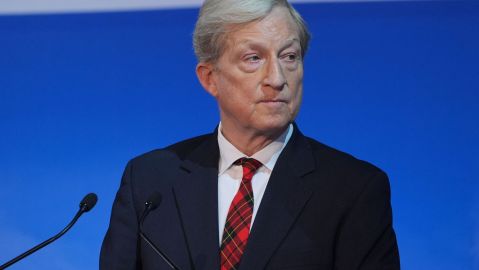
The Democratic billionaire’s campaign Tom Steyer was under investigation in California after a digital strategy based on payments to influencers to promote his candidacy without clearly disclosing that it was sponsored content.
The Washington Post revealed how content creators on TikTok and Instagram received money to spread messages favorable to Steyer in the middle of the race for governor of California.
According to state election finance records, some influencers received thousands of dollars for political posts. One of the most visible cases was that of the creator Jason Chuwho has more than 130 thousand followers between TikTok and Instagram.
In February, Chu published a video analyzing Steyer’s past as an investment fund magnate and defending his supposed transformation towards progressive and environmental causes. However, the influencer failed to mention that he had received $2,000 for “online communications” linked to the Democrat’s campaign. This video accumulated more than 10 thousand views.
Influencers, TikTok and political money
The investigation indicates that the campaign Steyer used a network of influencers with different audience levels to try to position the businessman as an “ethical billionaire” and close to social causes.
According to official documents, The campaign also paid $10,000 to influencer Isaiah Washingtonwho has 1.8 million followers on TikTok. In one of his videos — which was later deleted — the content creator interviewed Steyer and praised his personality while questioning whether young people could trust someone who became rich thanks to capitalism.
According to the aforementioned media, none of the publications included visible warnings indicating that the sponsored know-how content.
The campaign would channeled several of these payments through Gutsy Mediaan audiovisual production and consulting firm that received more than $300,000 for digital and production services, according to state records.
Furthermore, the controversy escalated after it was discovered an offer published on the SideShift platformwhere payments of just $10 per post were offered to creators who uploaded between one and three videos a day supporting Steyer. The ad promised bonuses for content that exceeds 100 thousand views.
Subsequentlythe offer was modified to announce payments of one thousand dollars per month and add the obligation to include legal notices of sponsored content.
California investigates possible election violations
The situation led to a formal investigation by the California Fair Political Practices Commission (FPPC)the body in charge of supervising electoral financing.
State legislation passed in 2023 requires influencers and digital creators to clearly disclose when they receive money to support or attack political candidates. California is one of the few states with a specific regulation on electoral advertising on social networks.
Beatrice Gomberg and Kaitlyn Hennessy, the content creators who promoted the complaint, They maintain that Steyer’s strategy sought to artificially manufacture a sense of standard support.
“He is trying to create the appearance of a standard movement, but in a synthetic and very deceptive way,” Gomberg told the aforementioned media.
For his part, Kevin Liao, spokesperson for the campaign Steyer denied irregularities and assured that the campaign did inform the creators about their legal obligations.
“The campaign believes in compensating people for their time and work”Liao said.
Keep reading:
- Congressman Swalwell leads poll for California governor
- California gubernatorial candidate, Tom Steyer, integrates Julie Chávez, granddaughter of César Chávez, into his team


