

By Arlenys Tabare
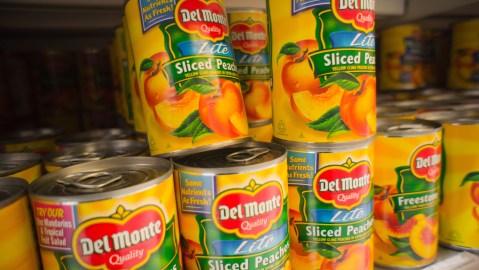
Currently, more than 70 peach growers in California are eliminating hundreds of orchards after the American food producer and distributor Del Monte Foods filed for bankruptcy in July of last year, filing for Chapter 11 after a large debt that prevented it from continuing its operations.
The bankruptcy of Del Monte Foods has caused the cancellation of several contracts with local farmers and these, without a significant buyer for their production, are choosing to eliminate their orchards in order to avoid continuing to lose money and reconvert the land for other crops.
It is estimated that The departure of Del Monte Foods will generate losses of up to $550 million for the sector. Following the $285 million acquisition by Fresh Del Monte Build, farmers expected them to take over the contracts; However, the agreement does not foresee the reactivation of the processing plants in California.
In this regard, Carissa Sauer, spokesperson for Del Monte Foods, said that the company chose to make an orderly closure of its operations, recognizing the great impact this decision will have for both the company and the community as a whole. “Our priority is to support our team and our customers during this transition,” he said.
Given the situation, recently the United States Department of Agriculture (USDA) reported that will carry out a federal emergency plan with funding of $9 million dollars for California peach producers who did not renew contracts with Del Monte Foods, and which is intended to help eliminate 420,000 peach trees.
In this regard, the executive director of the California Canned Peach Growers Association, Rich Hudgins, said that with USDA financing the orchards will not be replaced. ““No new trees will be purchased, the farmer is simply allowed to prepare the land to plant new trees.”said.
Keep reading:
- More than fifty restaurants have closed in Los Angeles due to pest and rodent infestation
- SNAP benefits in California: When will payments be sent in May?
- Tomato prices in the US reached the highest levels in eight years, according to BLS data
- These are the most contaminated foods of 2026: should you stop consuming them?


