

By Maribel Velazquez
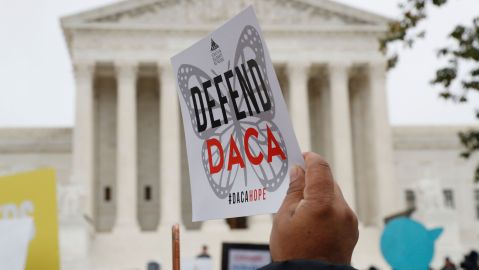
Delays in program renewal DACA Under the administration of Donald Trump they are leaving hundreds of beneficiaries in a factual limbo that directly impacts their work and internal lives. Recent cases documented by NOTUS show how even those who comply with the recommended deadlines end up losing their jobs and facing the risk of deportation.
One of the most representative cases is that of Vicente, a DACA beneficiary paramedic firefighterwho had to quit his job after his permit expired without his renewal being processed. Despite having submitted their request months in advance, the response never came.
“You do everything right and still you don’t get an answer or anything new,” he declared.
According to NOTUS, Vicente’s situation is not isolated; workers in different areas—from child therapists to public sector employees—have lost their jobs due to similar delays. The problem is that, Without valid work authorization, DACA beneficiaries cannot continue working legallywhich pushes them into an immediate economic crisis.
The DACA program, created in 2012, protects young migrants who arrived in the United States from deportation being minors and allows them to work legally. However, only renewals are currently being processed, and these are facing increasing delays. According to the United States Citizenship and Immigration Services (USCIS), the average processing time has reached 2.3 months, although many cases exceed that period.
Stories like Caesar’s reflect the human impact behind the numbers. At 25 years old, He lost his job as a video game tester just when he was about to buy a house with his wife.
“It’s like a constant nightmare… right now there’s nothing positive to celebrate,” he said. Today, his family depends on additional income and lives in uncertainty.
The panorama has generated criticism from the political sphere. Senator Dick Durbin charged that these delays are part of a strategy to weaken the program.
“Allowing renewals to be withheld while they lose their protection is the latest tactic to destroy DACA,” he said.
officials like Joseph Edlow have acknowledged delaysalthough they justify them as part of a more rigorous process. “It is a short-term pain that will lead to a long-term benefit,” he said.
Many beneficiaries, even complying with the suggested times, They face unemployment, anxiety and constant fear of deportation. “Not only is it economical, it is also mentally exhausting,” said Yenifer, a child therapist who has not been able to work for weeks.
Vicente’s case summarizes the dilemma: a public servant forced to leave his vocation not because of non-compliance, but because of the slowness of the system.
Keep reading:
- HUD rule would leave thousands of immigrant families homeless
- ICE expands detention of legal refugees without Green Card


