
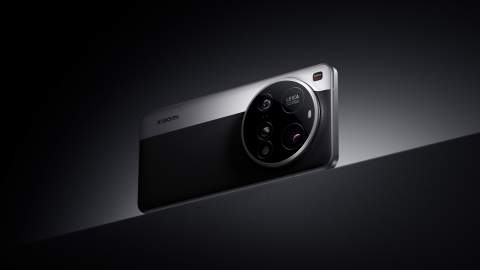
Over the last few years the design of many Android phones has converged into something very recognizable a great deal. circular camera module on the back. Meanwhile, brands like Samsung continue to opt for rectangular or column-aligned modules, so we are not facing an absolute truth but rather a aesthetic and technical trend that has been consolidated for various reasons.
From rarity to a hallmark
If we look back, Motorola had already led the way with several Motos that used a circle-shaped rear module as part of its design language, while its other lines opted for vertical cameras in the corner. This decision not only differentiated the brand in a saturated market, it also turned the camera area into an element almost as recognizable as the trace.
With the explosion of multi-camera systems came the challenge of add more sensors without making the phone look like a Frankenstein. Instead of filling the back with holes and rectangles, some brands saw the circle as an easy way to organize chaos. The idea is clear if you are going to have three or four cameras, a flash and perhaps additional sensors, a circular module allows you to group everything in a visually coherent way.
OnePlus took it to the extreme with the OnePlus 11 and its huge circular module inspired by a black hole, accompanied by the Hasselblad trace that reinforces the idea of “serious” photography. The message is direct even without gaping the technical sheet Your attention should go to that round island because photographic “magic” happens there. Huawei has also opted for round modules in its Mate series, such as the Mate 70 Pro and the leaks of the Mate 80 Pro with an even larger circle that integrates a necessary camera, extremely wide angle, periscopic telephoto and double flash.
Design reasons that go beyond aesthetics
Although the circle is a powerful symbol, it is not all about fashion. There are practical reasons behind this wave of circular modules. One of the most obvious is symmetry. A centered circle facilitates a balanced rear, something that helps the phone feel more stable in hand and respond more predictably when taking photos or videos.
From an engineering point of view, a large circular module offers space for increasingly larger sensors and more ambitious lensessomething key in high ranges where periscopic telephoto cameras and variable apertures are used. As the size of the sensors grows, the “bulk” of the camera is inevitable, so many manufacturers have preferred to embrace the volume and turn it into a main circle instead of trying to hide it with strange designs.
There is also an ergonomics angle. Some manufacturers and analysts point out that round modules help reduce visible and physical impact of multiple cameras, avoiding asymmetrical compositions that generate more rejection. The rounded edges of the module can better distribute shocks, which in theory minimizes the risk of breaking the camera glass in the face of very sharp corners. It is not a magic shield, but it is a way to cushion a critical point on the phone.
Additionally, a large circle works almost like the “lens” of a traditional camera. The mental reference is clear looks like a miniature professional camera lenssomething that fits with the marketing narrative of “your phone is your camera”. Again, here it is not about being better than a rectangular module, but about conveying a specific idea at a glance.
Not everyone wants a perfect circle
It would be easy to turn this into a war of factions, but the market tells a different story. Samsung continues to defend a very different line in its Galaxy, in many cases with rectangular modules or even vertically separated chambersan approach that we already saw criticized and praised in equal measure when the design of the Galaxy S11 Plus was leaked. Google also broke the norm with its horizontal bar on the recent Pixels, proving that the answer is not just “circle yes or yes.”
Even within the brands that fell in love with the circle there are nuances. It is rumored that OnePlus could abandon the circular module in future models like the OnePlus 15 and move towards a rectangular block in the corner, seeking a more sober look and aligned with other devices in its catalog. This reinforces the belief that the camera module has become a canvas for constant experimentationone year it can be a huge central circle and the next a minimalist rectangle.
Meanwhile, there are manufacturers who play both sides. Huawei combines triangular modules in some series and circular ones in others, depending on the message it wants to convey and the technical limitations of each generation. Motorola continues to use the circle as part of its DNA in many Motos, but has also tested different alignments in other segments.
Ultimately, what we see on the back of your phone is the result of a silent negotiation between marketing, engineering and visual trends. The circle is fashionable because it solves several problems at the same time It allows sensors to be grouped, sells a “knowledgeable” camera image and serves as a brand signature in a showcase saturated with rectangles. But that doesn’t mean it’s the only answer.
For those who look at mobile phones with the eyes of a user, the important thing will continue to be that the photos turn out well. For those of us who pay attention to the design, these circular modules tell an interesting story, that of an industry that seeks balance between function, identity and visible spectacle in each generation of phones.
Keep reading:
• Android 17 puts an end to one of the iPhone’s biggest advantages when posting content on social networks
• Android 17 arrives with AI, more security and tools for creators
• The hidden trick in Android to free up 7 GB of storage


