

By Maribel Velazquez
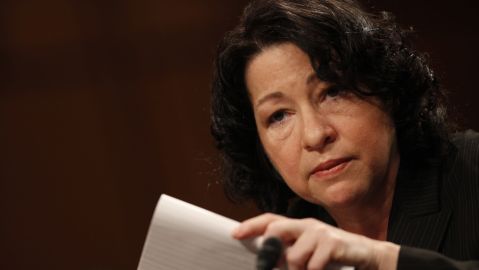
During the celebration of 250th anniversary of the United Statesthe face of the judiciary also tells a story of transformation. In that story it stands out Sonia Sotomayor, the first Latina woman to serve on the Supreme Court.
Born in the Bronx, New York, to a family of Puerto Rican origin, Sotomayor grew up in an environment marked by economic difficulties. Her father died when she was a child and her mother, a nurse, raised the family with discipline and effort. That early experience, the judge herself has said, shaped her worldview and her commitment to justice.
Graduate of Princeton University and Yale Law School, Her career progressed from prosecutor to federal judge. In 2009, she was nominated by then-President Barack Obama to a seat on the Supreme Court, where she has since been one of the most influential voices, especially on issues of civil rights, immigration, and equity.
“I hope to inspire future generations to believe that they can also achieve it”he has noted on multiple occasions, aware of the symbolic weight of his presence in court.
His arrival marked a before and after. Not only did he break barriers of representation, but he also introduced a different perspective into judicial deliberations. Sotomayor has defended the importance of recognizing how inner most experience can influence the interpretation of the law, a position that has generated both support and debate in the legal field.
In the context of the 250th anniversary of the United States, his figure reflects a profound evolution in the structure of American power. Yeah In 1776 justice was reserved for an elitetoday includes voices that represent the diversity of the country.
Beyond its failures, Sotomayor has become a cultural and educational reference. He has published books, participated in public forums and promoted access to education as a tool for social change.
His story connects with millions of Latinos in the United States who see in it tangible proof that it is possible to break structural barriers. In a country where identity continues to be a topic of debate, his presence on the Supreme Court symbolizes an openness that, although incomplete, is undeniable.
Two and a half centuries after its independence, the United States is not only reviewing its past, it is also redefining who has a say in its future. And in that process, Sonia Sotomayor occupies a central place.
Keep reading:
- White House reveals Trump’s plan to build a triumphal arch in Washington
- The White House intends to set a Guinness record during the celebration of the 250th anniversary of the United States.


