

By Deutsche Welle
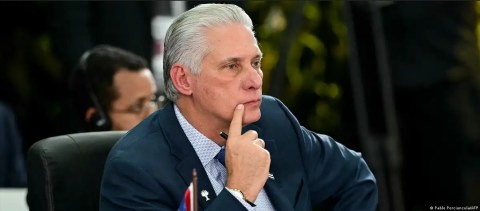
The president of Cuba, Miguel Díaz Canel, reiterated his willingness to “maintain a serious and responsible bilateral dialogue” with the United States and “find solutions to existing differences,” within the framework of the five-day visit to the island by US Democratic congressmen Pramila Jayapal and Jonathan Luther Jackson.
The parliamentarians concluded their visit on Sunday, at a time when US President Donald Trump has increased pressure on the communist government. Through a statement, Jayapal and Jackson asked to “immediately engage in negotiations that guarantee the dignity and freedom of the Cuban people and the enormous benefits for the American people that will derive from a precise collaboration.”
Díaz-Canel, for his part, published this Monday on his X (Twitter) account photos of his meeting with the legislators. The president stated that during the conversation with the Democratic leaders he denounced “the serious damage” caused by the US blockade, as well as the “threats of even more aggressive actions” by Washington.
They complained about “illegal block”
In their statement, Jayapal and Jackson claimed that “The illegal fuel blockade of Cuba is causing incalculable suffering to the Cuban people.” and it must stop immediately.” They revealed that during their visit they heard testimonies from “families, religious leaders, businessmen, civil society organizations”, in addition to the “Cuban Government, Latin American and African ambassadors, humanitarian aid organizations and Cubans from across the political spectrum, including dissidents.”
The Cuban Foreign Minister, Bruno Rodríguez also met with the legislators, and explained on social networks that he explained to them that “the multidimensional aggression that Cuba faces by the US Government, with a great impact on the Cuban population”has worsened “with the current energy fence.” He also conveyed to the congressmen that Cuba suffers a “constant and hostile communication campaign of discredit by all possible means” by Washington.
On March 13, Díaz-Canel recognized a “dialogue” with the United States, in “initial phases”, which represented a watershed in the escalation of tensions between both countries as a result of the deepening of the oil siege imposed by the US Government since January.


