
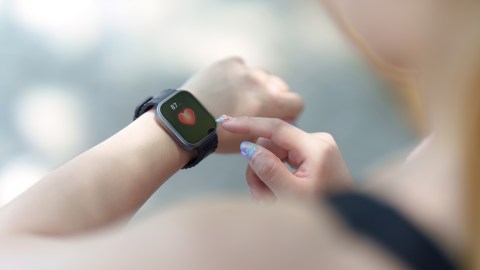
A good smartwatch can be your best silent trainer when you go for a run or go to the gym, but choosing the first one without being clear about what to look at usually ends in impulsive purchasing and disappointment. To choose the best option to measure your exercise statistics you need to look at five keys that go far beyond just looking pretty on your wrist.
Before buying your first sports smartwatch
The first thing is to be clear about what you really want it for. Someone who walks and does some light cardio is not the same as someone who trains for a half marathon or lives by the pool. Many experts agree that The decision should start from the type of sport and the valuable use that you are going to give the watch.since a model designed for intense work prioritizes things like accurate GPS and advanced metrics over more office functions.
This is also where the difference between a generalist smartwatch and a pure sports watch comes into play. The most complete smartwatches mix notifications, mobile payments and apps with health functions, although they usually offer batteries of one to three days on average and correct precision in casual workouts. Dedicated sports watches, on the other hand, give up so many apps to focus on more robust construction, physical buttons, multi-band GPS and autonomy that lasts several days of intense training.
First key account for your sports profile and your priority between smart functions and sports performance. If you train seriously for long races or triathlons, you will appreciate a sports watch with long battery life and advanced metrics. If you exercise more casually and care about answering notifications from your wrist, a balanced sports smartwatch may make more sense.
Second key, understand what sports you practice today and which ones you would like to work on in six months.. If you only run now but are bitten by the racing or swimming bug, the watch should have specific profiles for those sports, running modes, hiking, and decent water resistance. This way you won’t be left short when your training goes up a notch.
Sensors and metrics that really matter
If you want to use the watch to measure your performance, the sensors are the bottom line. Sports watch specialists focus on three pillars for well-measured training: GPS, heart rate sensor, and battery capable of lasting long sessions.
Third key, look at the GPS and how you are going to use it. A good GPS allows you to record distances, paces and routes quite accurately, which is essential if you run outdoors, cycle or hike. Some models even use multi-band GPS to improve the signal in complicated areas such as cities with many tall buildings or mountains. If you only train on a treadmill or in the gym you can live with a more basic GPS, but if your training is mainly outdoors it is better to prioritize one that is as accurate as possible.
The other key sensor is the heart rate sensor. Not all of them measure the same and training guides insist on looking for reliable optical sensors, since training by heart rate helps you control the intensity and real effort. Many sports watches add metrics such as blood oxygen, sleep analysis and VO2 max that help you understand your recovery and fitness level in more depth.
The user experience also depends on how you see that information. A very bright AMOLED screen looks great outdoors and makes it more comfortable to check paces and intervals while running, although it tends to consume more battery than simpler panels. The idea is to find a balance between visibility in the sun and autonomy depending on how you train.
Battery, resistance and daily experience
Autonomy is one of the points that most separates a watch designed for serious sports from a more urban smartwatch. Reviews and buying guides point out that many generalist smartwatches offer around one or two days of normal use, while pure sports watches can reach one or two weeks and offer dozens of hours with active GPS. Some experts recommend that, if you plan to use GPS a lot, look for a minimum of about seven days in basic mode or about twenty hours with active positioning so as not to suffer with the charger before each long run.
Fourth key, check very well the real autonomy and how it behaves with the GPS on. A manufacturer promising ten days of light use is not the same as seeing clear figures of how many hours it lasts recording activity with route tracking. If you usually do mountain routes, long bike rides or training sessions lasting several hours, the battery becomes almost as important as the GPS.
The body of the watch also matters more than it seems. Sports watch guides insist on water resistance and materials, especially if you swim or train outdoors. For swimming, adequate resistance is recommended that supports continuous immersion and water sports modes that include lengths and strokes. If your thing is to simply sweat in the gym with a little rain from time to time, with a basic resistance certification and comfortable silicone straps you are more than enough.
Fifth key think about the ecosystem and compatibility as much as the watch itself. Most models are synchronized with smartly being apps on your mobile where you can analyze rhythms, pulse zones and the evolution of your training in much more detail. Make sure the watch is compatible with your operating system, that the statistics are exported well to the applications you use, and that the app’s interface does not complicate your life every time you want to review your progress.
Lastly, don’t underestimate things like case size, weight, or strap type. Some guides recommend choosing a size according to your wrist and comfortable materials, because if the watch bothers you at night or gets stuck when you do push-ups, you will end up leaving it in the drawer no matter how accurate it is.
In short, if you want your first smartwatch to be your ally in training and not just a pretty accessory, you should combine these five keys: sports profile, sensors and GPS, battery, resistance and tool ecosystem. With this clear list you can compare options without falling into the typical war between fashion brand and pure sports watch and choose the model that best suits your actual way of training and how you want to grow as an athlete in the coming months.
Keep reading:
• What to take into account before buying a smartwatch
• OnePlus To find 2: find out what the new low-cost top-price smartwatch is like
• Pixel To find 3: reasons to buy -or not- the Google smartwatch now that it costs $50 less


