

By Samuel Gonzalez
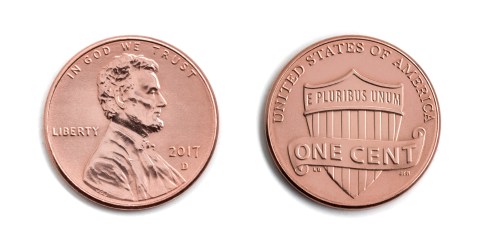
After the United States government stopped production of penny coins in November 2025, A bill that would require rounding up purchases when you do not have the exact change in pennies advances in Congress. We explain how it would affect your purchases if approved.
On Tuesday, the House of Representatives approved the so-called Common Cents Act, so The initiative will now go to the Senate for analysis.
In addition to establish a uniform criterion for rounding cash paymentsthe bill orders the United States Department of the Treasury to stop the minting of new one-cent coins, although existing ones will continue to have their normal value.
If the proposal becomes law, any purchases paid in cash must be rounded to the nearest multiple of five cents. For example, an account of $10.02 dollars would be adjusted to $10.00 dollars, while a total of $10.04 dollars would be charged at $10.05 dollars. The measure would only apply to payments made with cash and would not modify operations carried out with cards or other electronic means.
The initiative responds to a problem that has become more frequent as the availability of pennies decreases. Although bills continue to generate amounts in fractions of a cent due to state and local taxes, many businesses no longer have enough coins to provide exact change.
According to some reports, this situation has left some businesses exposed to claims or even sues when they cannot return the necessary changeeven when the rounding ends up favoring the consumer.
Therefore, the project seeks create a federal rule that serves as a reference for companies, banks and consumers, preventing each establishment from applying different criteria when collecting a cash purchase.
The National Restaurant Association (NRA) supported the initiative, considering that it will offer greater legal certainty to businesses that operate daily with cash.
“We called for a national rounding standard,” Sean Kennedy, advocacy director for the National Restaurant Association, told CBS News. “Most businesses round to the nearest multiple of 5 cents, either up or down, which seems like common sense. But there’s no federal law that allows it. What we’re looking for is certainty and minimizing frustration for customers and cash-based businesses.”
Although the organization supports the project, it recognizes that the transition would have an economic impact for some establishments. The NRA estimates that rounding down resulting from the shortage of cents could represent losses close to $168 million dollars a year for the sector.
“Those pennies do add up. Eliminating the penny will cost restaurants, and there’s nothing we can do about it,” Kennedy said. “But we look for certainty as the penny is phased out.”
Another argument behind the initiative is the cost of producing this currency. The last penny was minted in November 2025 and, according to the United States Mint, Each piece costs almost four cents to manufacture, an amount much higher than its face value.
Despite the project’s progress, the Common Cents Act still needs Senate approval before reaching the president’s desk. If you pass this process, consumers who continue paying in cash will begin to see the entirety of their purchases automatically rounded up under the single federal rule described.
It is important to highlight that Those who use cards or digital payments should not notice changes in the amount of their transactionssince these can be made for the exact figure charged by the establishment, without the need to apply any rounding.
You may also be interested in:
- Disney+ free? The platform analyzes this option
- Who will pay less on their September electricity bills
- Mega Hundreds and thousands accumulate $576 million: 4 ways to improve your chances of winning
- Price of the dollar in Mexico today, July 17, 2026: greenback closes the week strong
- IRS increases the mileage rate in mid-2026: how it affects you if you use a car for work


