

By Arlenys Tabare
Amid a fragile truce and ongoing war negotiations with Iran, economists say the price of gas in the United States will remain high for some months even if the conflict were to end soon.
Since the conditional closure of the Strait of Hormuz, through which nearly 20% of the world’s crude oil transits, The prices of both oil and gasoline have become more expensive and the latter is already being felt by the pockets of American consumers, who They are paying more than double for fuel than a few months ago.
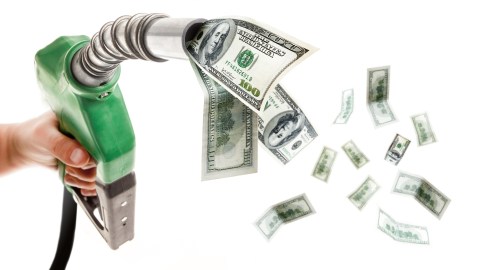
Currently, according to AAA data, the average price of gasoline is $4.26 per gallon compared to $2.50 before the war; However, in some states such as California and Washington the cost per gallon reaches $6.
In this sense, Patrick De Haan, GasBuddy oil expert, commented that prices will be regulated depending on when ships begin to transit the Strait of Hormuz, but for the specialist, “It will be a very long process, from several months to several years, until the situation is completely normalized. “We won’t see those levels until possibly mid to late 2027,” he told CBS.
For his part, Richard Joswick, executive director and global head of short-term oil analysis at S&P World Energy, noted that “when a deal is announced, we will see an instant drop in the price of crude oil, but that will not be reflected in gasoline prices because the supply is still scarce.”
In this regard, Jennifer Li, senior geopolitical analyst at Rystad Energy, added that it will take time to recover oil tanker flows through the Strait of Hormuz and for refineries to operate at full capacity again.
The strait was closed between late February and early March as a retaliation and response by Iran to attacks by the United States and Israel. Although a truce was achieved in April for a reopening of commercial traffic, the situation remains tense with strict controls and strong traffic conditions.
For De Haan, once the strait reopens, the producing countries will need weeks to reactivate, since, according to the expert, most of what arrives through the strait will be used to satisfy demand. “The recovery of reserves will take more time. It could be months before that oil reaches the market. This is something that is developing in the long term”.
Keep reading:
- Ted Cruz rules out that high gasoline prices could influence the election result
- More Americans are using their emergency savings to cover transportation expenses
- Cracker Barrel will raffle up to $250,000 in food and gas: Who can participate?
- Korean scientists discover how to make air flammable


