

By Samuel Gonzalez
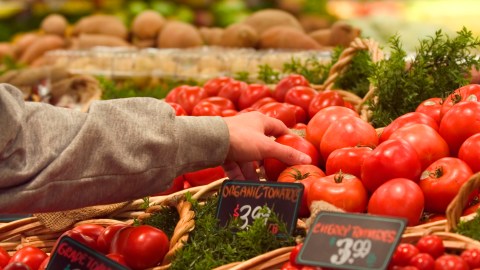
There is so much talk about the increase in the price of gasoline in recent weeks that it overshadows the increase in other items. You may not be aware of how much all products go up in the United States; but it feels, it feels. And if you are very observant, you have probably noticed that There is a basic food that has risen exorbitantly in the last year: the tomato.
According to government data from April, the price of tomatoes increased by about 40% compared to the same month last year. The increase far exceeds the long-established increase in food, which was around 17%.
These figures are supported by those of the Federal Reserve (Fed) which show that The average price reached $2.69 dollars per pound of tomatoa record level for this product.
The increase is also higher than that observed in other foods that have registered significant increases in prices. During the same period, coffee rose 18.5%, ground meat 19% and seafood 12%according to the Bureau of Labor Statistics (BLS).
Tariffs on Mexico raise costs
One of the main factors behind this increase is the new trade policy applied by the United States to Mexican tomatoes. A 17% tariff came into force in July after the US government abandoned a trade deal that For three decades it allowed the entry of Mexican tomatoes without that tax.
The measure benefited some national producers, but also raised import costs. Federal data shows that The collection of tariffs on tomatoes went from just $16,424 dollars in 2024 to almost $4.6 million dollars.
The dependence of the US market on Mexico explains why this change had such an important effect. During 2025, About 90% of tomato imports from the United States came from Mexican territory.
“Given that the United States depends on Mexico for most of its tomato supply, any change in trade policy can have a big impact,” Brett Massimino, a business professor at Virginia Commonwealth University, told CBS News.
Lower production and higher transportation costs
Added to the commercial changes are problems in agricultural production. Adverse weather conditions and some diseases have affected crops in both Mexico and Floridareducing the available supply.
“What makes it unique is the fact that there is a shortage of tomatoes and there is no shortage of other agricultural products,” said Phillip Coles, a professor of supply chain management at Lehigh University.
Phil Lempert, a food industry analyst known as SupermarketGuru, said rising oil prices are driving up logistics costs. That said in other words means that Transportation has also contributed to the increase in prices.
“Due to the war in Iran, transporting tomatoes has become more expensive,” said Lempert.
Tomatoes are often moved in refrigerated trucks that require more fuel to operate. This causes any increase in energy costs ends up being reflected in the price consumers pay.
“When there is a significant increase in a well-known cost component, this ends up having a big impact in the end,” explained Massimino. “It is a strange situation that all these things coincide at the same time”.
You may also be interested in:
- What happens if your bank account is blocked before a payment?
- They launch an application to open Trump accounts with $1,000 free
- Is it true that there would be a $250 bill with Trump’s image on it?
- Southwest will refund the price of a seat to certain passengers: who
- New Costco product for $2. Ninety 9 conquers customers in its food court


