
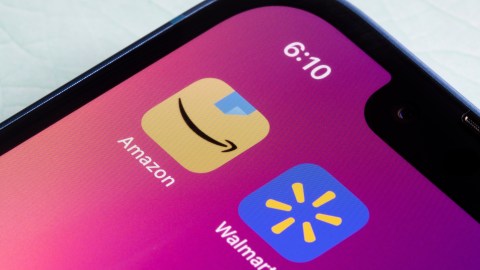
If going to the supermarket already feels like the pain of a body blow, the blow could be even greater. Big chains like Walmart, Amazonamong others, They have already begun to warn their customers that the increase in gasoline prices and transportation costs is already affecting their operations.. Will the prices of your products increase? They explained what could happen.
The increase in fuel occurs amid international tensions related to Iran and the effects on trade in the Strait of Hormuz. Since the beginning of the conflict, The average price of gasoline in the United States has increased more than 50%according to data from the American Automobile Association (AAA).
At the moment, The national average for extra special gasoline is $4.55 per gallon. This not only impacts drivers; It also raises distribution, transportation and logistics costs for retail companies.
Walmart already anticipates possible increases
During the presentation of financial results for the first quarter of 2026, Walmart reported that absorbed approximately $175 million in additional fuel-related expenses. Although the company reported positive income and growth of 7.3%, its managers recognized that the outlook could become complicated if prices remain high.
“If the current high-cost environment persists, we expect somewhat higher retail price inflation in the second quarter and the second half of the year,” said John David Rainey, Walmart’s chief financial officer.
Rainey also noted that many low-income families are already facing hardships due to increased gas and daily expenses. As he explained, The impact could be felt even more in the coming monthsespecially when the temporary economic boost generated by tax refunds wears off.
Amazon also transferred costs
Amazon took similar steps since April. The company confirmed that it began applying a temporary 3.5% surcharge to third-party sellers in the United States and Canada due to the increase in fuel and logistics. Although the charge does not appear directly as an increase for buyers, it does increase costs for thousands of sellers who use the platform, who typically They end up transferring those expenses to the final consumer.
“Increased order fulfillment and logistics costs have increased operating costs across the industry,” Amazon said in a message sent to sellers and obtained by CNBC. “So far, we have absorbed these additional costs. However, when costs remain high, we apply temporary surcharges.”
Other chains seek to avoid increases
Not all companies are reacting the same. Some companies are trying to resist pressure to avoid losing customers at a time when many consumers are already cutting back on spending. Regional chain Stew Leonard’s previously informed CBS Data that several suppliers began charging fuel surcharges, a situation that put the company “between a rock and a hard place.” Even so, the company assured that seeks to avoid raising prices while possible.
For its part, Kroger announced that it plans to reduce prices on thousands of products to compete with Walmart and Costco.
“Our goal is to execute what we consider a very clear and sensible plan. We want to be the best supermarket chain in the United States,” said Greg Foran, CEO of Kroger, in an interview with Bloomberg.
The distant future does not look encouraging: inflation remains high, fuel is the most popular part that drives it and the war with Iran maintains a fragile truce. Get ready, because prices will rise if these circumstances continue.
You may also be interested in:
- Price of the dollar in Mexico today, May 26, 2026
- Social Security: who will receive $2,000 on May 27
- Social Security COLA 2027 would be almost 4%, according to a new estimate
- Kevin Warsh is named the new chairman of the Federal Reserve, approved by the Senate
- Will Kroger give away free appliances? What you should know about an agreement with the US government


