

By The Opinion
The White House does not plan to sign an agreement with Iran this Sunday to unblock the Strait of Hormuz and advance in a nuclear negotiation framework, despite the expectations generated in the last hours, reported the American media
According to the media, officials from Donald Trump’s Administration consider that the pact could be finalized “in the coming days”, since technical and political differences still persist between Washington and Tehran.
A senior American official told the media that the Iranian supreme leader, Mojtaba Khamenei, would have approved “the well-liked scheme” of the understandingalthough he warned that “there are still some details to close” and that the approval process within the Iranian regime “is slow.”
The possible agreement contemplates the reopening of the strategic Strait of Hormuz, a key passage for global oil trade, in exchange for partial relief from US sanctions and the lifting of the naval blockade on Iranian ports. According to leaks cited by Reuters and Axios, the draft would also include a 60-day extension of the ceasefire while negotiations over the Iranian nuclear program continue.
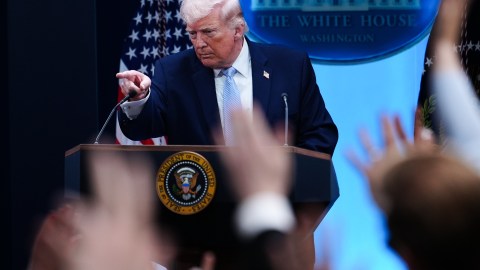
In a message published this Sunday on his social network Truth Social, Trump assured that talks with Iran “are advancing constructively,” although he stated that he had ordered his negotiating team to act without haste and guarantee that the eventual pact “is truly positive.” The president added that the relationship with Tehran “is becoming much more professional and productive,” but reiterated that Iran “cannot develop or acquire a nuclear weapon or bomb.”
The Secretary of State, Marco Rubio, defended the draft agreement during an official visit to India and rejected criticism from Republican sectors who consider the concessions to Tehran excessive. “The idea that the president, after everything he has demonstrated, is going to accept an agreement that ultimately ends up putting Iran in a stronger position in terms of its nuclear ambitions is absurd. That is simply not going to happen,” Rubio declared, according to various international media.
Rubio also stated that Washington is willing to begin “very serious negotiations” on uranium enrichment and nuclear disarmament once the Strait of Hormuz is reopened. “The nuclear issue cannot be resolved in 72 hours on a napkin,” said the official, according to reports collected by Xinhua and other media.
However, the possible understanding has generated criticism within the Republican Party. Senators and Trump allies have questioned the logic of the military offensive launched at the end of February against Iran if Washington finally ends up relaxing sanctions and once again allowing Iranian oil exports.
Furthermore, doubts remain about the exact extent of Iran’s nuclear commitments. Reuters reported that Tehran has not yet agreed to hand over its reserves of highly enriched uranium, one of the most sensitive points in the negotiation.
Keep reading:
- The US suspends arms sales to Taiwan to guarantee ammunition in its war against Iran
- Trump will not go to his son’s wedding in the Bahamas because of his “love for the United States”


