
Knowing that public opinion polls predicted the loss of the Republican majority in Congress, President Trump encouraged Republican governments and state legislatures to redraw their electoral districts to dilute the Democratic vote. In practice this means dividing districts with a majority of African Americans.
The states answered his call. Texas restored a gerrymandered map that a rotten court had already rejected as discriminatory, gaining up to five seats. So did Florida, North Carolina, Ohio, Missouri and Tennessee. Alabama is liquidating one of two Democratic seats, as is Louisiana.
Democrats reacted similarly.
In California, voters authorized suspending the division of districts independently and the Legislature designed a new map with five more districts to be resolved by Democrats. In New York, the attempt to redraw an electoral district was suspended after the Supreme Court in March invalidated a Rotten court’s decision that allowed it.
And when Virginia voters approved a referendum that would give Democrats 10 of the 11 seats in the House of Representatives, the state Supreme Court declared the new electoral maps unconstitutional.
On May 3, the Supreme Court, in Louisiana v. Callais, further weakened the Voting Rights Act’s protections for African-American representation. Republican governors and legislatures launched into a frenzy of redistricting and maneuvering to wipe out African-American representation.
Based on the premise that African Americans vote Democratic, majority-African American districts that were based on laws achieved through years of fighting for civil rights are disappearing in state after state. Mississippi, with a 38% African-American population, is disappearing the only African-American district, represented by Bennie Thompson, who chaired the congressional investigation of the events of January 6, 2021 and is the target of hatred from Trump supporters.
In Louisiana, the Republican governor even suspended the primary elections that were already underway to change districts and give his party the advantage.
History is reversed. In 1875, after the defeat of the slaveholding South in the Civil War, there were seven African American congressmen and one federal senator from those states. With discriminatory laws, by 1902 all congressmen were white. Between 1900 and 1903 the number of African-American voters in Alabama, for example, fell from 180,000 to fewer than 3,000.
These “Jim Crow” laws prevented African American and Native American voters from registering and casting their ballots, establishing literacy tests, poll closings and police intimidation, reduced voting patterns, educational, property or tax requirements for voting. Under the “Grandfather Clause” in seven states, only those who had enjoyed the right to vote before 1866 and their descendants would be exempt from those requirements.
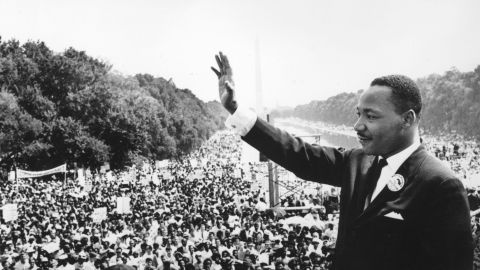
With the victory of the civil rights struggle, the number of African-American members of Congress rose from 13 in 1971 to 62 today.
A third of them could lose their jobs in November.
To make matters worse, the nation’s highest court this week instructed lower courts to restrict legal challenges related to voting rights, a move that could erase previous legal victories by voting rights groups.
The struggles of the African American community for civil rights paved the way for the insertion and political participation of the Latino community. The same laws used now against those who were slaves in this land can also reduce the electoral presence of Hispanics. We warn and protest against this outcome.
Unfortunately, Republicans are leading the next elections to be decided, not by persuading voters, but by decimating opposition representation.


