
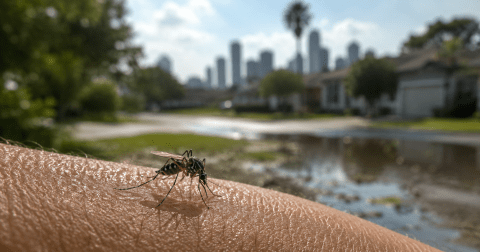
Texas confirmed the first human case of West Nile virus of 2026and the diagnosis sparked a health alert in Harris Countythe county where Houston is located. According to the Texas Department of State Health Services, the patient was diagnosed with neuroinvasive disease by West Nile virus, the most serious form of this infection transmitted by mosquitoes.
The news comes in the middle of the warm season, when rain, heat and stagnant water can favor the reproduction of mosquitoes in patios, gardens, pots, buckets, drains and other spaces around the house.
State officials asked Texas residents take precautions to avoid bites and reduce breeding sitesespecially in urban and suburban areas of the Houston area.
Although most infected people do not develop symptoms, The virus can cause severe symptoms in some patients. Therefore, the recommendation is not to panic, but to act early: use repellent, remove accumulated water and consult a doctor if compatible signs appear after a bite.

The case was reported in a Harris County resident and confirmed by state health officials. According to the DSHS, this is the first case of West Nile virus disease recorded in Texas in 2026. The person was diagnosed with the neuroinvasive form, which can affect the brain, the membranes surrounding the brain and spinal cord, or the nervous system.
For medical privacy, the authorities did not disclose the patient’s personal data. But the report marks the beginning of a stage of greater epidemiological surveillance, because the virus usually spherical with more intensity during the warm months.
Harris County Public Health maintains a surveillance dashboard for mosquito-borne diseases, including West Nile virus, dengue fever, chikungunya, St. Louis encephalitis, and Zika. This panel is updated daily and allows monitoring the activity of these diseases in the county.
What is West Nile virus?
West Nile virus is primarily transmitted by the bite of infected mosquitoes. Mosquitoes acquire the virus by feeding on infected birds and can then transmit it to people and other animals.
It is not spread by casual contact between people. The fundamental risk is associated with exposure to mosquitoes, especially in areas where circulation of the virus has already been detected.
According to the CDC, West Nile virus is one of the leading mosquito-borne diseases in the continental United States.. Most infections are mild or have no symptoms, but some can lead to serious neurological diseases.
Symptoms of West Nile virus
A significant portion of infected people never find out they had the virus because they do not develop symptoms. However, when they appear, the symptoms may resemble those of a common viral infection.
The most common signs include:
- Fever
- Headache
- body pain
- Fatigue
- Nausea or vomiting
- Joint pain
- Skin rash, in some cases
Concern increases when neurological symptoms appear. The CDC warns that severe illness may include high fever, stiff neck, disorientation, tremors, seizures, muscle weakness, loss of vision, numbness, paralysis or coma.
Who is most at risk of becoming seriously ill?
Anyone exposed to infected mosquitoes can contract the virus, but not everyone has the same risk of complications. The CDC says older people, especially adults age 65 and older, are more likely to develop neurological disease.. Those with chronic diseases such as cancer, diabetes, hypertension or kidney disease, as well as people with a weakened immune system, are also more at risk.
This is especially important for families who live with older adults or people with underlying health conditions. In those homes, bite prevention should be a daily measure during mosquito season.
How to Prevent Mosquito Bites in Texas
DSHS asked residents to take simple but consistent steps. The fundamental recommendation is to eliminate stagnant water around the home, because mosquitoes can reproduce there.
The most important actions are:
- Empty buckets, pots, water troughs, toys, tires and containers with accumulated water.
- Check gutters, drains and areas where water may remain after rain.
- Use EPA-registered repellent, following label instructions.
- Wear long-sleeved shirts and long pants when there are many mosquitoes.
- Install or repair mosquito nets on doors and windows.
- Avoid, when possible, prolonged exposure during times of greatest mosquito activity.
Houston Neatly Being also reminds that there is no vaccine to prevent West Nile virus infection in humans, so protection against bites remains the most important tool.
Is there treatment for West Nile virus?
There is no specific medicine to cure West Nile virus. The CDC explains that antibiotics are not useful to treat this infection because it is a virus, not a micro organism. In mild cases, management usually includes rest, hydration, and over-the-counter medications for fever or pain, as medically indicated.
In severe cases, some people may need hospitalization for supportive treatment, such as intravenous fluids, pain management, and more intensive medical care.
When to see a doctor
The recommendation is to seek medical attention if intense or unusual symptoms appear after a mosquito bite, especially high fever, severe headache, stiff neck, confusion, muscle weakness, tremors, seizures or difficulty moving.
The consultation is even more important in older adults, people with chronic diseases or immunocompromised patients.
Continue reading:
The 5 Best Insect Repellents of 2026, Lab Tested and Rated.
Cheap vacations in Texas: affordable travel tips for this summer


