
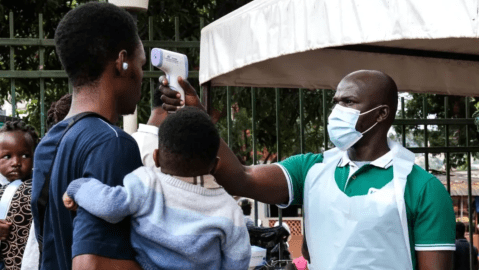
The World Health Organization (WHO) classifies the Ebola outbreak in the Democratic Republic of the Congo and Uganda as a “public health emergency of international concern.” Although not considered a pandemic emergency, the rising death toll and lack of an approved vaccine are raising concerns.
Driven by the Bundibugyo virus, this outbreak has resulted in at least 80 suspected deaths and 246 suspected cases in Ituri province, DR Congo. Symptoms include fever, fatigue and bleeding.
In Uganda, two confirmed cases have also been reported in Kampala, with no apparent connection between them. The authorities reported that they are monitoring the affected people.
Let us remember that the largest Ebola epidemic experienced so far occurred between 2014 and 2016, which occurred in Guinea Conakry, Sierra Leone and Liberia, causing more than 11,000 deaths. On that occasion, several affected Spanish, British or American missionaries and health workers were repatriated to be treated in Europe and America, review EFE.
Proposals and practices for containment
Health agencies, including the US Centers for Disease Control and Prevention (CDC), are sending resources for abet watch over activities. Surveillance and contact tracing measures are being implemented to prevent the spread.
The WHO has highlighted the importance of a coordinated international response and plans to convene an emergency committee to define appropriate actions. Doctors Without Borders is also preparing for a rapid and effective response to this outbreak.
Affects a “small number of Americans”
The CDC stated in a statement Sunday that a “small number of Americans” are directly affected by an Ebola outbreak occurring in the Democratic Republic of the Congo.
“The CDC is collaborating with other US agencies to coordinate the safe evacuation of citizens,” they indicated in their statement. However, the agency did not confirm the number of people affected, the type of exposure or whether any had shown symptoms.
“We do not comment or debate individual cases,” said Dr. Satish Pillai, head of Ebola incident management at the CDC, during a press conference, reported ABC Info. “It is a very dynamic situation and at the moment what I can say is that we continue to evaluate the situation and we will keep you informed as we learn more information.”
This has prompted regional containment efforts and a warning issued by the United States not to travel to the affected province in Congo.
From another source, it was known that at least six Americans in the Congo were exposed to the Ebola virus. Thus, international aid organizations informed CBS Infoalthough it was not clear if any had been infected.
How is Ebola transmitted?
Ebola is transmitted through direct contact with the blood or other body fluids of an infected person, especially when they already have symptoms, or with objects contaminated by those fluids. It can also pass from infected animals to people, but is not transmitted through the air.
It is believed that certain species of bats are the hosts of this virus and from them the virus is transmitted to other animals and people.
Meanwhile, if there are no symptoms, it is considered that there is no risk of contagion, but it remains infectious as long as there is the presence of virus in the blood.
The incubation period ranges between two and 21 days, and isolation of the patient is key.

Main forms of contagion
- Blood.
- Vomiting, diarrhea and feces.
- Saliva, urine, semen, breast milk and vaginal fluids.
- Needles, clothing, sheets or other contaminated surfaces.
- Contact with infected wild animals.
What doesn’t usually happen
It is not spread like a cold or the flu through the air, or by being close to a person without contact with their fluids.
What types of vaccines are in development?
There are currently two approved or widely used Ebola vaccines, and several in development or research, mainly aimed at improving cross-protection between strains and facilitating their use in future outbreaks.
Vaccines already approved or in use
- rVSV-ZEBOV (Ervebo®, Merck): It is a viral vector vaccine (recombinant vesicular stomatitis virus) that expresses the glycoprotein of the Zaire ebolavirus virus. It is approved by the FDA and WHO to prevent Ebola disease caused by the species Zaire ebolavirus and has been used in outbreaks in the Democratic Republic of the Congo.
- Ad26.ZEBOV / MVA‑BN‑Filo (Johnson & Johnson): Two-dose schedule with adenovirus 26 (Ad26.ZEBOV) as priming and MVA-BN-Filo as booster. It is not approved in the US, but has been used in outbreaks in the DRC in trial and emergency vaccination programs.
Vaccines and prototypes in research
- Oxford vaccine (ChAd3-ZEBOV and similar): Vaccines based on chimpanzee adenovirus (e.g., cAd3-ZEBOV) have been tested for years in phase 1; Immune responses were generated, but their development has been slowed or redirected compared to the Merck vaccine.
- mRNA vaccines (e.g. Moderna): Specific mRNA vaccine prototypes are being developed against other strains of Ebola (other than Zaire), but are still in preclinical or early testing, with no published human trials.
- “Cross-protection” vaccines using Ervebo: Public health agencies (WHO, Africa CDC, AU) are evaluating whether the Ervebo vaccine, intended for Zaire, can offer partial protection against other Ebola species (for example, the recent Congo strain); Emergency protocols are being designed to test this “cross protection” in humans.
Total staunch status of investigations
- The strategy prioritizes two-dose or booster vaccines to provide longer-lasting and broader protection, as well as single shot vaccines (like Ervebo) for quick use on outbreaks.
- An important focus is to obtain vaccines effective against several species of filovirus (Ebola and, in some schemes, Marburg virus), something that is not yet fully achieved and is actively researched.
You may also be interested in:
· Revelations about the Andes strain: first genetic analysis of the cruise hantavirus rules out that it is due to mutations
· They confirm that a drug used for another disease works against hantavirus
· Can hantavirus spread in the US? What you should and shouldn’t worry about, according to the CDC


