
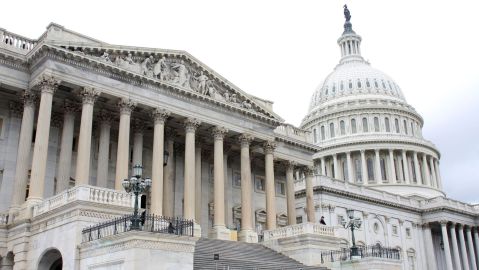
Congress revived the #MeToo movement which changed the way cases of sexual harassment around the world are dealt with almost a decade ago, and for weeks has been undergoing a deep reflection on the culture of silence that surrounds these issues.
The resignation of two congressmen, the Republican Tony Gonzales and Democrat Eric Swalwell, surrounded by accusations of sexual misconduct, shook the Capitol last April and reopened a wound that seemed healed in the institution.
While Swalwell denies sexual assault allegationsGonzales did admit to having had an affair with one of his subordinates that ended up committing suicide.
Congress is now debating its ability to react to these cases and facing a third scandal since the Ethics Committee made public this week that it is investigating the Republican. Chuck Edwards because it “may have created or encouraged a hostile work environment.” and having incurred sexual harassment.”
“Zero tolerance for harassment”
Democratic Congressman Ro Khanna assured in statements to EFE that “the rapid response to the news about Swalwell on Capitol Hill and the bipartisan support for accountability demonstrate that the culture in the cases of abuse could be starting to change. “There should be zero tolerance for harassment.”
“People in positions of power can no longer play by different rules,” says the representative from California who defends that “the Ethics Committee is carrying out investigations.”
“We must keep up the pressure and ensure transparency and accountability,” said.
Khanna believes that we could begin to see more people dare to report, given that “for too long, victims have been afraid to speak for fear of reprisals.”
“Let’s hope this starts to change,” he concluded.
The Democratic congressman was one of the promoters of the law that forced the publication of the documents of sex offender Jeffrey Epstein.
Khanna acknowledges that “We still have a long way to go to solve it”but values recent actions because “they represent a small step forward.”
End to the “culture of silence”
Although the first wave of #MeToo marked a turning point in the way cases of harassment and abuse are addressed and the Congressional Accountability Act was reformed in 2018, the truth is that The culture of silence has remained more or less hidden in the Capitol.
A study of the National Women’s Defense League reveals that up to thirty members of Congress have been accused of sexual harassment in the workplace over the past 20 years, although the number is likely much higher as few cases are publicly reported.
Complaints about the lack of transparency and slowness in investigations They have intensified after the latest cases and have reissued the spirit of the campaign from almost a decade ago.
This same week, a bipartisan alliance was announced, between the president of the House of Representatives, Republican Mike Johnson, and the Democratic minority leader, Hakeem Jeffries, to reform and streamline the way Congress handles these matterswhich reveals the importance that is recognized to this issue, elevated to an institutional problem.
The climate created by #MeToo caused the campaign itself to receive recognition from Time Magazine Person of the Year in 2017 and contributed to a record number of women running for public office in the 2018 midterm elections. We will have to see in this second wave how far the changes go in the Capitol, the heart of American politics.
Keep reading:
- Eric Swalwell resigns from Congress amid sexual misconduct allegations
- Florida Republican gubernatorial candidate Kevin Cichowski arrested on charges of domestic violence


