
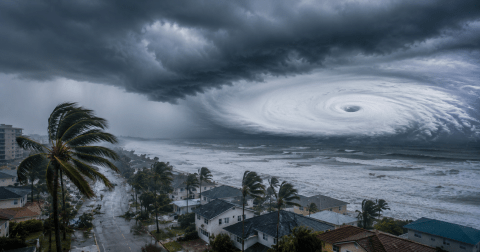
The hurricane season It is one of the most closely watched times of year in the United States, especially for millions of people who live in coastal areas exposed to storms, floods and power outages. Although it is not possible to know months in advance When will the next major hurricane make landfall?yes there is a official calendar and historical patterns that allow you to prepare.
According to the National Oceanic and Atmospheric Administration (NOAA), The Atlantic hurricane season officially begins on June 1, 2026 and ends on November 30, 2026. Historically, activity typically intensifies between August and October, with September being the highest risk period.
Recent experience explains why the issue is of concern. In recent years, Hurricanes like Ian, Idalia, Beryl and Helene left thousands of evacuees, multimillion-dollar damage and disruptions to essential services.
Beyond the exact path of each storm, the message from the authorities is consistent: prepare before the season starts can make an important difference.
You can see: Texas eliminates taxes on emergency products
When are storms and hurricanes most likely to arrive?
Although June marks the official start, not all months have the same level of risk. According to NOAA and the National Hurricane Center (NHC), activity usually follows this pattern:
- June and July: slack start, with less frequent systems.
- August: significant increase in activity.
- September: historical peak of the season.
- October: risk still high, especially in the Caribbean and Gulf.
- November: progressive decline.
That means that The period of greatest attention is usually concentrated between the end of summer and the beginning of autumn.
Florida: the most exposed state
Florida usually tops any hurricane vulnerability list. Its location between the Atlantic and the Gulf of Mexico leaves it exposed to storms from multiple directions. Cities such as Miami, Tampa, Fort Myers, Naples, Orlando and Jacksonville usually remain under constant monitoring during the season.

In addition to the direct impact of the wind, one of the biggest risks in Florida is the storm surgeflash floods and prolonged power outages.
Storm surge is coastal flooding associated with a low-pressure atmospheric system (typically a tropical cyclone). It performs well when winds aloft push the ocean surface.
You can see: Flee Florida? The home insurance crisis forces many families to sell their properties
Texas: threat on the Gulf Coast
Texas also faces significant risk during each season. Areas such as Houston, Galveston, Corpus Christi and other coastal cities may be affected by hurricanes that enter from the Gulf of Mexico.
In Texas, the risk is not limited to wind. The extreme rainfall and urban flooding They are usually one of the main dangers, even when the storm loses strength before making landfall.
You can see: What parents should review before summer camp: what the Camp Mystic tragedy in Texas taught
Louisiana: high vulnerability by geography
Louisiana maintains high historical exposure due to its coastal geography and low-lying areas. New Orleans and other communities near the Gulf are especially sensitive to flooding and storm surges.
Katrina’s memory continues to shape public perception, but each season poses new risks.
Alabama and Mississippi: frequent risk on the Gulf Coast
Although they receive less media attention than Florida or Texas, Alabama and Mississippi are also within the frequent impact zone.
Coastal communities may face evacuations, structural damage and essential service outages as intense systems move through the Gulf.
Georgia and the Carolinas: Threat on the East Coast
Georgia, South Carolina and North Carolina are also part of the risk corridor. Charleston, Savannah, Wilmington and other coastal cities typically go into precautionary alerts during active systems.
In addition to the coastal impact, weakened storms can move inland and cause severe flooding.
New York and New Jersey may also feel impacts
Although they are not the first states that come to mind when talking about hurricanes, New York and New Jersey are not off the map.
Superstorm Sandy made it clear that intense systems can severely impact the Northeast, especially with coastal flooding, transportation disruptions, and infrastructure damage.
Is California at risk?
The eastern Pacific rarely generates direct hurricane hits in California. However, remnants of tropical storms can leave heavy rain, flash flooding or mobility problems, as has recently happened with unusual systems.
How to prepare before the season starts
The Federal Emergency Management Agency (FEMA) recommends not waiting for an alert to act. Among the basic measures:
- Review home or rental insurance.
- Prepare drinking water and non-perishable food.
- Have essential medications.
- Have batteries, flashlights and chargers.
- Identify evacuation routes.
- Save important documents.
Continue reading:
Keys to identify heat stroke and what to do
You could stop paying taxes if you are a victim of a natural disaster
Why Florida is a state so prone to being hit by hurricanes


