
He hantavirus re-established itself in the public conversation in the United States. Not because of a massive outbreak—it remains a rare disease—but because of recent cases that raised alarm, including the episode reported in a cruise with sick and deceased people which is still under health investigation. That context reactivated a specific question: how real the risk is and in which areas of the country we need to pay more attention.
The response of the specialists is clear: The risk exists, but it is low and focused. It is not a community circulation virus like other respiratory viruses. However, when it appears, it can be serious. According to the Centers for Disease Control and Prevention (CDC)since hantavirus pulmonary syndrome was identified in 1993, few have been confirmed. more than 800 cases in the United States, with a mortality rate close to 30%–35%.
You can see: WHO confirms 8 cases of hantavirus on Hondius cruise ship, but maintains low risk for public health
Where is the most risk in the US?
The distribution is not uniform. The cases are mainly concentrated in the west of the country, where the habitat of the carrying rodents is more common. The states with the greatest historical record are:
- California, especially in rural areas, parks and mountainous areas like Yosemite.
- Colorado, where some of the first cases were identified in the 1990s.
- New Mexico, one of the states with the highest proportional incidence.
- Arizona, with reports linked to desert areas and isolated homes.
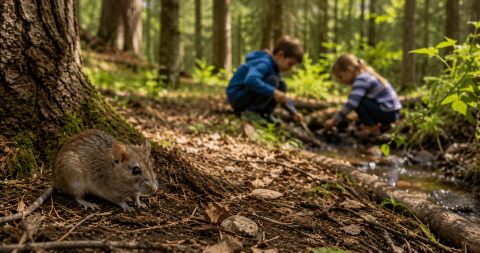
In all these cases, the common declaration is the same: contact with wild rodents, in particular the so-called “deer mouse”, leading carrier of the virus in North America.

Hantavirus does not spread from person to person in the United States. Contagion occurs when a person comes into contact with particles contaminated by infected rodents. It is an important piece of information for a brand. important difference with what is happening with the cruiseinfections and quarantines for those who were infected: In South America there are variants (such as the Andes virus) where person-to-person transmission has been documented, mainly in Argentina and Chile.
The The most common way is to inhale dust that contains traces of urine, feces or saliva from these animals. This usually happens in very specific situations: cleaning a closed cabin, entering an abandoned garage or handling objects in spaces where there was an infestation.
The California Department of Public Health warns that the risk increases in poorly ventilated environmentswhere the virus can remain suspended in the air during cleaning.
Transmission can also occur by touching contaminated surfaces and then touching your face, although this route is less common.

The impact of the recent case
The episode reported on a cruise ship—with sick people and deaths being investigated—amplified concern because it breaks the idea that it is a virus exclusively associated with rural environments.
Experts consulted by American media agree that, even if confirmed, Most likely, the infection is linked to previous exposure to rodents.and not to an on-board transmission.
You can see: What happens inside the cruise ship affected by hantavirus: is there a risk that it could spread?
Hantavirus symptoms: the critical point
One of the problems with hantavirus is that It starts like a common flu. Fever, muscle pain and fatigue are the first symptoms. But, in some cases, in a few days, the disease can evolve into a severe respiratory distress.
That is why specialists insist on a key point: the context matters as much as the symptom. If a person has been in contact with environments with rodents and then presents these signs, they should consult immediately.

You can see: California inaugurates the bridge for animals over a highway
How to prevent contagion
Prevention remains the most effective tool and is based on avoiding exposure to contaminated dust.
CDC recommendations include ventilate closed spaces before cleaning them, use gloves and a mask and avoid dry sweeping, as this raises particles into the air.
It is also key keep homes free of rodents, seal access and store food safely.
Finally, doctors and health authorities emphasize that Hantavirus is not an everyday risk in the United States, but it is a serious disease in specific contexts. Exposure to rodents in closed spaces continues to be the main cause of contagion.
What are the prevention measures
To avoid exposure to hantavirus, it is key to minimize contact with these animals and their contaminated habitats.
At home and rural areas
- Ventilate any closed space (such as warehouses, sheds or cabins) for at least 30 minutes before entering, opening doors and windows to renew the air.
- The US gloves, mask and glasses when cleaning; Spray surfaces with water and bleach (one part bleach to 10 parts water), and avoid dry sweeping to avoid raising infected particles.
- Keep the perimeter of the house clear: cut weeds at ground level for 30 meters around, eliminate debris and rodent shelters.
Outdoors or activities
- Avoid collecting wild fruits from the ground, walk during the day in wooded areas and do not camp in areas with signs of rodents.
- When handling firewood, weeding or working in gardens, the USA protects the interior most and places the gardens away from the house (more than 30 meters).
- Store food and water in airtight plastic containers, wash your hands frequently, and check local health alerts about cases in your area.
Continue reading:
Rodent infestation forces the closure of dozens of restaurants in LA
The most used plant in Texas to keep away rattlesnakes: myths and truths
Something is waking up a dangerous animal early in California


