
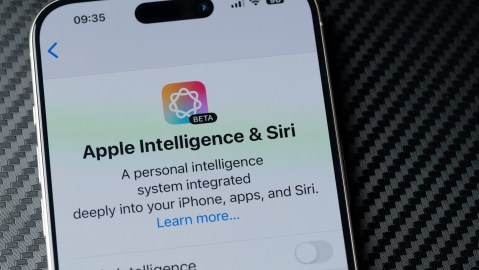
Apple has just agreed to pay $250 million to settle a class-action lawsuit that accuses the company of having deceived millions of users with promises about Siri’s artificial intelligence capabilities.
The story begins in June 2024, during WWDC, the annual event where Apple always brings out its heavy artillery. In this scenario, the company presented Apple Intelligencehis big bet on artificial intelligence, and promised a completely renewed version of Siri, capable of competing head-to-head with tools like ChatGPT or Claude. The problem is that the iPhone 15 and iPhone 16 arrived in stores without those functions that had been advertised so much in television commercials, cyber web campaigns and on all possible channels.
A user named Peter Landsheft filed the lawsuit in federal court in California in 2024, and it quickly became a class action with thousands of people affected.
Why Apple promised more than it could deliver
What makes this case especially striking is the level of detail with which Apple sold those features. The company didn’t just mention AI improvements in passing, it built entire ad campaigns around a Siri that’s smarter, more personalized, and more connected to the user’s daily life. There was talk of an assistant capable of understanding the personal context, of interacting with multiple applications at the same time and of giving responses adapted to each person, something that would have represented a huge leap compared to the Siri that we all know.
The problem is that, according to the lawsuit, those capabilities did not exist at the time of launch and would not be available for a long time. The plaintiffs argued that Apple generated a reasonable and false expectation on consumers, who bought their iPhones believing they were getting cutting-edge technology that wasn’t actually ready. The lawsuit directly classified it as false advertising that influenced purchasing decisions.
By 2025, Apple finally admitted that the comprehensive overhaul of Siri using AI would not come as soon as promised. That admission, although late, was an implicit recognition that something had gone wrong in the communication. And although the company does not admit fault in the current agreement, it decided to pay $250 million dollars to close the case instead of continuing to fight it in court.
Who can receive the money and how much is due
Now comes the part that most interests those affected. The deal is specifically aimed at consumers residing in the United States who purchased an iPhone 15 or iPhone 16 between June 10, 2024 and March 29, 2025. That date window is no coincidence: it starts right on the day Apple announced Apple Intelligence at WWDC 2024 and ends when the company publicly acknowledged its technological delay in the race for AI.
The estimated defective compensation is $25 per eligible devicebut there is an interesting detail that can increase that figure considerably. If the number of users filing claims is lower than projected, the payment per device could rise to a maximum of $95 dollars. So whoever claims early has potentially the most to gain.
It is important to clarify that the 250 million dollars do not go entirely to the users. A part of the fund will be allocated to legal fees and the administrative costs of the current process, something completely common in this type of collective agreements. The relevant thing is that the rest of the money will be distributed among those who meet the requirements and present their formal claim before the deadline expires.
The agreement must still receive approval from a judge before the payments become effective. Once approved, an official process will be enabled where eligible users can register their claims. The recommendation for those who believe they qualify is to pay attention to the official channels of the current case, since the exact forms and deadlines to request compensation will be published there.
Apple goes ahead and plans to reveal the new Siri in June
Despite the economic and reputational blow, Apple is not willing to be left behind in the battle of artificial intelligence. The company has already confirmed that it will present the updated version of Siri at its annual developer conference scheduled for June 8, 2026, which adds an ironic component to this entire episode: the announcement that should have arrived almost two years ago will finally appear weeks after the company agrees to pay a fortune for its delay.
The latest rumors suggest that the new Siri experience could be powered by Google Gemini as a large-scale language engine, although there is also talk that the next iPhone operating system could allow users to choose between different third-party AI models. That would represent a radical change in Apple’s philosophy, which has historically preferred to control the entire experience from within.
Meanwhile, Apple defends that since the launch of Apple Intelligence it has incorporated dozens of AI functions in various languages and platforms, including tools such as Visual Intelligence, Are residing Translation, Writing Instruments, Genmoji and Neat Up. For the company, the agreement refers only to the availability of two specific functions that did not arrive on time. The official reading is that the case is now closed and that the important thing now is to continue innovating.
What this episode makes clear is that promises in the world of technology have real consequences, and that consumers, especially in the United States, already know how to make them pay. Apple, with all its marketing machinery, learned the hard way that announcing the future before having it ready can be very expensive.
Keep reading:
• Apple could delay new AI-powered Siri features again
• Apple surrenders to Google’s AI: Siri will have a Gemini engine with a multi-year agreement
• Apple is developing a version of Siri capable of conversing with users


