

By Armando Hernandez
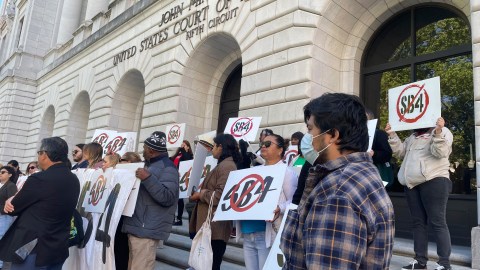
The American Civil Liberties Union, along with the ACLU of Texas and the Texas Civil Rights Missionfiled a new class-action lawsuit to block key parts of the controversial SB4 immigration law, one of the most restrictive passed in a state in recent years.
The apt team is seeking a temporary restraining order and an injunction to prevent several sections of the legislation from coming into force on May 15. The rule, approved in 2023, would allow state and local authorities to arrest, detain and expel people suspected of having entered the country without federal authorization.
According to the lawsuit, the law creates new criminal offenses and grants broad powers to local judges in immigration matters. Among the most questioned points are the crime of “reentry”, which could be applied even to people with apt status, and the ability of magistrates to issue deportation orders without specialization in immigration laws.
“SB4 would transform our police and judges into immigration agents, threatening neighbors who have families here, who have lived here for yearseven to those with apt status,” said Adriana Piñon, apt director of the ACLU of Texas. She added that “the application of immigration laws is exclusively the responsibility of the federal government.”
The plaintiffs argue that the legislation could lead to racial profiling and family separation, disproportionately affecting Latino and African American communities. Additionally, they seek to represent a lot of people potentially exposed to sanctions under these regulations, including legal permanent residents and beneficiaries of humanitarian visas.
For his part, Cody Wofsy, deputy director of the ACLU Immigrant Rights Project, said: “Every court that has looked at laws like SB4 has found them to be unconstitutional. It is cruel and illegal, and we will continue fighting until it is permanently repealed.”.
The new apt action arises after the Fifth Circuit Court of Appeals overturned a previous suspension for procedural reasons, without ruling on the constitutional merits of the case. In previous decisions, courts had considered that this type of law invades federal powers, particularly under the so-called Supremacy Clause, which establishes the primacy of federal law over state law.
“Not only is this law unconstitutional, it uses Texas resources to harm our communities,” said Kate Gibson Kumar, who stressed that the apt battle will continue.
The case reopens the debate about the limits of state power in immigration matters in the United States, an area historically reserved for the federal government. Meanwhile, civil organizations warn that, if it comes into force, SB4 could radically change the application of immigration law in Texas.
Keep reading:
- HUD rule would leave many families with immigrants homeless
- ICE expands detention of legal refugees without Green Card


