
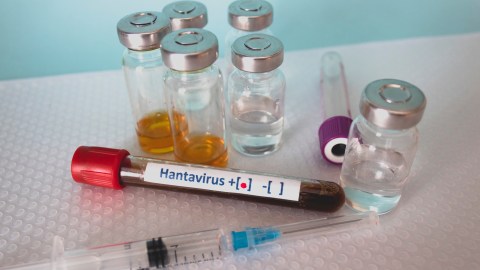
The MV Hondius, a Dutch cruise ship with almost 150 people on board, off the coast of Cape Verde, reported a suspected hantavirus outbreak, causing three deaths and at least three seriously ill passengers. Among the passengers were 17 Americans, and the fatalities were a Dutch man and two Germans.
The World Health Organization (WHO) stated that it is working with local authorities and ship operators to carry out a “full public health risk assessment” and coordinate the evacuation of sick people, it reported. Associated Press (AP).

Let us remember that this disease gained notoriety in 2025, after the wife of the late actor Gene Hackman, Betsy Arakawa, died from a hantavirus infection in New Mexico.
What is hantavirus and how is it transmitted?
Hantavirus is transmitted primarily through contact with the urine and feces of infected rodents. Although considered rare and not easily transmissible between people, the outbreak has sparked an alert response from health authorities.
People are often exposed to hantavirus in their homes, cabins, or sheds, especially when cleaning closed spaces with poor ventilation or exploring areas where mouse droppings are present.
Although the WHO states that, although it occurs rarely, hantaviruses They can also be transmitted directly between people.
The Centers for Disease Control and Prevention (CDC) began tracking the virus after an outbreak in 1993 in the Four Corners region, the area where Arizona, Colorado, New Mexico and Utah meet.
“It’s a nasty disease,” said Dr. Jeff Duchin, a retired Seattle public health official who helped characterize this first known outbreak of the disease in the 1990s. However, he explains: “It is not always fatal nor always serious, but it is believed that the mortality rate reaches up to 40%, which is really high,” he noted. NBC Info.
Hantavirus symptoms
The initial symptoms of hantavirus resemble those of the flu and are key for people at risk, such as those exposed to rodents in rural areas, to seek immediate medical attention.
Initial symptoms
These appear between 1 and 8 weeks after exposure and last 3-5 days:
- Fever and chills.
- Severe headache.
- Muscle pain (especially in the back and thighs) and joint pain.
- Extreme fatigue and frequent discomfort.
- Nausea, vomiting, belly pain or diarrhea in some cases.
Severe symptoms (pulmonary phase)
They appear 4-10 days later and require urgent attention due to the risk of respiratory failure (~40% mortality):
- Dry cough or difficulty breathing.
- Tightness in the chest and fluid in the lungs.
- Tachycardia and low blood pressure.
People at risk
Farmers, campers, or residents in areas with wild rodents should watch for these signs, as the virus is transmitted by inhalation of aerosols from rodent droppings, urine, or saliva.
Preventive measures
To avoid exposure to hantavirus, transmitted mainly by wild rodents and their excreta, it is key to minimize contact with these animals and their contaminated habitats.
At home and rural areas
- Ventilate any closed space (such as warehouses, sheds or cabins) for at least 30 minutes before entering, opening doors and windows to renew the air.
- The US gloves, mask and glasses when cleaning; Spray surfaces with water and bleach (one part bleach to 10 parts water), and avoid dry sweeping to avoid raising infected particles.
- Keep the perimeter of the house clear: cut weeds at ground level for 30 meters around, eliminate debris and rodent shelters.
Outdoors or activities
- Avoid collecting wild fruits from the ground, walk during the day in wooded areas and do not camp in areas with signs of rodents.
- When handling firewood, weeding, or working in gardens, use personal protection and place gardens away from the house (more than 30 meters).
- Store food and water in airtight plastic containers, wash your hands frequently, and check local health alerts about cases in your area.
Are there treatments against hantavirus?
There is no specific antiviral treatment for hantavirus, so management focuses on intensive supportive care to improve the chances of survival.
Main care. Patients usually require immediate hospitalization, often in the ICU, with supplemental oxygen and mechanical ventilation in severe cases to treat respiratory failure and fluid buildup in the lungs.
Advanced interventions. In critical situations, endotracheal intubation, extracorporeal membrane oxygenation (ECMO), or machines may be used to oxygenate the blood, along with renal support if there are complications.
Experimental options. Some protocols include convalescent plasma from survivors or tocilizumab for severe cases, but these are not universally approved standard treatments.
You may also be interested in:
· Advances in diagnosis: a tuberculosis test is born that does not need phlegm
· Lung cancer, an ignored problem: most of those who should undergo screening tests do not do so
· Resurgent threat: Deadly bacterial disease returns amid low vaccination rate


