

By Ramon Castro
The promise of cars that recharge with the sun has always sounded irresistible. Less dependence on plugs, more autonomy and an almost perfect concept on paper. However, the reality has been much more complex, with timid progress and results that never quite convince.
Read also: Offer: Tesla bets on Supercharging to boost sales
Toyota decided to look at the problem from another angle. Instead of obsessing about capturing more energy, the Japanese brand focused on something less visible but just as critical.
You can see: Jaguar and Land Rover face delicate mass recall
The heat generated by internal systems could be the real barrier that stops this technology.
The problem was not the sun
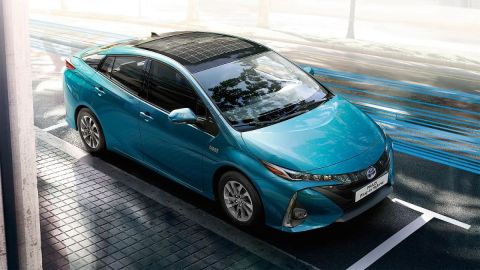
For years, different manufacturers have opted to integrate solar panels into their vehicles. From roofs to larger surfaces, the concept was always the same, generating additional electricity to power the battery.
The problem appears later. Converting that energy into something useful involves constant processes that generate heat. This thermal excess ends up affecting performance and accelerates the wear of electronic components.
That’s where Toyota believes it has found a more realistic answer. It is not just about producing energy, but about ensuring that the system can work stably for a long time.

A solution that is smarter than powerful
The patent registered by the brand proposes a quite practical approach. Instead of reducing the performance of the entire system when overheating occurs, the vehicle identifies which converter is most stressed.
That component receives a specific limitation, while the rest continues to function at greater capacity. In this way, the system maintains a higher level of efficiency without compromising its integrity.
In more extreme situations, You could even temporarily disconnect the most affected element to prevent further damage. It is a way of distributing the effort instead of stopping the whole thing.
Durability as a priority
This change of focus has a clear logic. If the systems do not stand the test of time, any advance in energy capture loses meaning.
Heat is one of the factors that most affects electronicsand controlling it can make the difference between a viable solution and a passing experiment.

While other manufacturers continue to look for more efficient panels, Toyota seems to be betting on making what is already available work better and longer.
Will we see this on the street?
As with many patents, There is no immediate confirmation that this technology will reach production. Still, it makes the path the industry is exploring quite clear.
Toyota has already tested solar charging systems on some hybrid and plug-in models, so this development doesn’t appear out of nowhere.. It is part of a broader strategy that aims to improve energy efficiency on several fronts.
The key is not always to generate more, but to make better use of what you already have.
Continue reading:
Kia surprises with an unimaginable futuristic electric
Fire risk again: Ford calls for massive review
Something is happening: electric cars are losing steam in the US.


