

By The Opinion
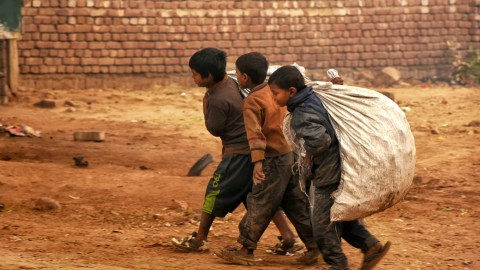
New projections of United Nations Development Program (UNDP) warn that the armed conflict between the United States, Israel and Iran could have devastating consequences globally, driving more than 30 million people into poverty.
And in a 27-page report published on Tuesday, the UNDP estimates that up to 32.5 million people could fall below the poverty line due to the crisis of energy availability and affordability, the increase in food prices and the fall in the Gross Domestic Product (GDP).
Global economic consequences
The report highlights that the regions most vulnerable to these impacts include the Persian Gulf, Asia, sub-Saharan AfricaOh, small island developing states. It is estimated that Iran has lost the equivalent of a year and a half of progress in human development alone in the first month of the conflict, which began in late February when the United States and Israel launched attacks on Iran.
Alexander De Croo, administrator of the UNDP, He stressed that “war is development in reverse.” He explained that a conflict can undo in weeks the progress made by countries over the years. De Croo noted that the impact of the escalation in the Middle East affects the most vulnerable countries, which have less fiscal capacity to deal with rising energy and food prices. “This analysis shows that not only the countries directly involved in the conflict are affected, but also those with the fewest resources are the hardest hit,” he said.
Situation in Iran
As the war progresses, the human consequences are serious. According to the Human Rights Activists News Agency (HRANA), as of April 7, 2023, at least 1,701 civilians in Iran have been killed since the start of the conflict, including 254 children.
Despite continued hostilities, attacks have not stopped, with more than 20 occurring in the last day no reported victims. The two-week ceasefire, which was expected to ease the situation, came into effect shortly after these figures.
UNDP recommendations to mitigate the impact
UNDP proposes specific humanitarian aid measures to mitigate the effects of the conflict, suggesting an allocation of up to $6 billion in temporary cash transfers to most vulnerable households.
It also recommends temporary subsidies and vouchers to ensure people can access basic services such as electricity and gas for cooking. However, the UNDP is against widespread energy subsidies, as these mainly benefit the wealthiest families and are unsustainable in the long term.
Negotiations without agreement
Meanwhile, Negotiations between the United States and Iran continue without reaching a definitive solution. Officials from both countries met in Pakistan over the weekend with the goal of curbing Iran’s nuclear program and ending hostilities. However, the efforts did not bear fruit.
US Vice President JD Vance, who led the US delegation, assured that although there was “some progress”, an agreement was ultimately not reached.
“The decision is in Iran’s hands,” Vance declared in FoxNews, highlighting that the United States has put many options on the table.
From the Iranian side, the foreign minister, Abbas Araghchi expressed frustration at the failure of negotiations.
In a message on platform “Good will begets good will, enmity begets enmity,” Araghchi concluded.
Keep reading:
- Pelosi suggests psychiatric help for Trump after criticism of Pope Leo XIV
- Trump urges the United Kingdom to exploit North Sea oil in the face of the energy crisis over Iran
- Why the naval blockade of Iran is a risky move by Trump and what role China plays
- Three oil tankers cross the Strait of Hormuz on the first day of the blockade ordered by Trump
- Vance downplays dispute between Trump and Pope Leo XIV; highlights negotiations on war in Iran


