
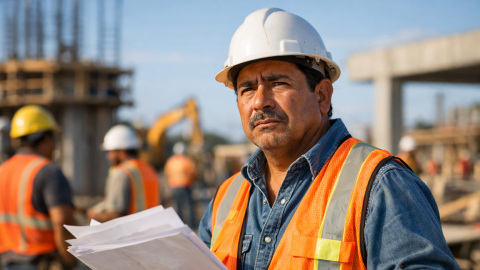
Work in construction in Texas It has been, for years, one of the main employment gateways for thousands of migrants in the United States. However, Starting May 1, 2026, that scenario could become more complex.
A new state regulation—promoted in a context of greater pressure on the labor market and the maintain an eye on immigration— reinforces requirements around licenses and certifications in certain construction jobs. The change does not affect everyone equally, but it does introduce an element of risk that many previously overlooked.
As established by the Texas Commission on Licensing and Regulation (TDLR), from “it will be a requirement to demonstrate true status to be able to access a professional license.”
The regulations were approved unanimously in a vote held by the TDLR on March 24 and tightens controls on construction work that requires a license. Not everyone needs it, but in those who do, these documents become decisive.
You can see: Raids in Texas for false documents: how networks that get jobs with stolen identities operate
What changes since May 1 in Texas
The thrust of the new regulations is clear: greater control over who is authorized to work on certain tasks within construction.
In practice, this means more construction inspections, verification of specific licenses or certifications and greater responsibility for contractors and employers.
Not all jobs require a license, but those that do will now be more closely monitored.
What jobs may require a license
In Texas, certain activities within construction were already regulated, but now compliance is becoming stricter. Among them:
- Electricity.
- Plumbing.
- HVAC (air conditioning and heating).
- Some specialized structural work.
These areas often require specific state certifications or permits to operate legally.
You can see: Filing taxes in Texas: how to know if the IRS has already approved my refund
Risks for those who work without a license
The brightest point is the impact on migrant workers, many of whom enter the sector without meeting all the formal requirements. The main risks include:
- Fines or sanctions.
- Loss of employment.
- Additional legal problems if there are inspections.
- Greater exposure to labor exploitation (informal, unprotected jobs).
In some cases, The problem is not just the lack of a license, but working for employers who do not comply with the regulations.
What documents does Texas accept to obtain a professional license?
One of the key points of the new requirement in Texas is to demonstrate real presence in the country when applying for certain work licenses.
As detailed in the TDLRthere are several valid options to prove this requirement. These are the documents that can be presented:
- Driver’s license or state ID that meets the standards of REAL ID.
- United States passport.
- US military identification card.
- Weapons license issued by the Texas Department of Public Safety (DPS).
- Immigration documents issued by federal agencies that confirm true presence and work authorization, such as the Department of Fatherland Security (DHS), US Citizenship and/or Immigration Companies (USCIS).
You can see: “He was about to graduate”: the story of Mauro Henríquez, the deported student in Texas
Why this issue worries the Latino community
Construction is one of the sectors with the largest presence of Latino workers in the US. In states like Texas, it represents a key source of income for migrant families.
Tightening controls can generate fewer informal job opportunities, greater pressure on workers without complete documentation, and changes in hiring dynamics.
What many are not taking into account
A critical point—and one that is rarely mentioned—is that the responsibility does not fall solely on the worker.
Contractors and employers may also face penalties if they hire deepest without the required licenses for certain tasks. This could lead to stricter controls even before hiring.
What workers can do
Faced with this scenario, specialists recommend verifying whether the work you do requires a license and consulting with local authorities or sector associations. It is also key to avoid regulated tasks without certification and look for accessible training or certification programs.
In short, the change in Texas does not prohibit working in construction, but it does increase the risks for those who do so without meeting certain requirements.
The key is to know which jobs require a license and anticipate controls.
Continue reading:
Many in Texas are losing money: almost no one uses these benefits and discounts
Automatic military registration: you could be left out and have problems even if it is not your fault
Best jobs with high salaries for immigrants in the USA in 2026


