
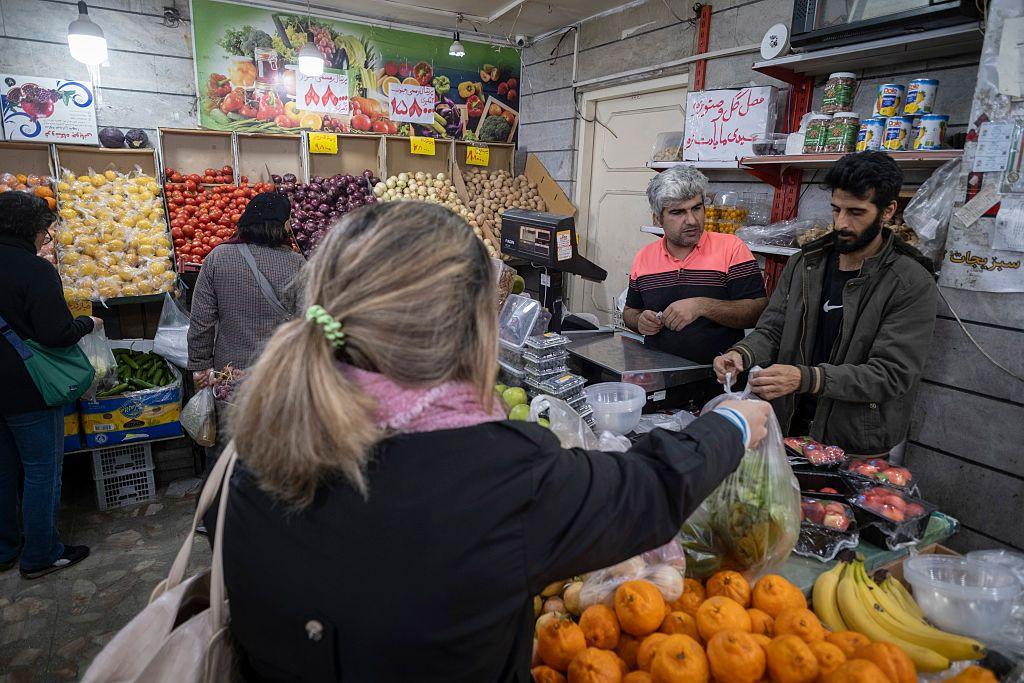
With the escalation of the United States and Israel’s military conflict with the Islamic Republic of Iran, it appears that the Iranian people must prepare to face a new form of pressure, one that will not be felt through direct military means, but through disruptions in the food supply chain.
The closure of sea routes, increased risks to shipping and damage to port infrastructure have raised concerns about what the food supply situation will look like in the coming weeks and months.
Iran’s food supply structure is highly dependent on sea imports. It is estimated that around 25 million tons of commodities such as wheat, corn, barley, soybeans, oil and sugar enter the country annually, of which more than 90% are transported through southern ports, including Imam Khomeini, Bandar Abbas, Bushehr and Chabahar.
This concentration has turned these ports into vital bottlenecks. Now, due to infrastructure damage, rising insurance costs, and limited insurance coverage, the efficiency of these routes has decreased.
Given this situation, northern ports such as Anzali and Amirabad have been used to try to alleviate part of the shortage, but due to the military attack on the port of Anzali and the limited capacity and access, they cannot completely replace the southern route. Consequently, the use of land routes has been debated more than before.
Of course, some assessments indicate that the situation has not yet become critical.
Ishan Banu, an expert at the Kpler Institute, told the BBC Persian service that, despite the interruption in the supply chain, Iran has reserves for several months thanks to large imports in recent months, and that the unloading of some shipments in the Persian Gulf continues.
He added that, with the end of Brazil’s corn export season, imports of this product have decreased, but Iran has imported a large volume in the last six months.
Samer Abdul Jabbar, regional director of the World Food Organization, also told the BBC: “Due to problems with its own ports and with Pakistan, Iran has imported goods through Turkey, the Caspian Sea, the Caucasus route and by land, but in the long term this does not meet the country’s needs.”
Thus, it seems that the food situation in Iran is not critical, at least for now.
The weight of imports

Under normal circumstances, the supply of basic goods in Iran is based on a combination of domestic production and imports.
According to official data for 2025, wheat production exceeded 12 million tons, while annual consumption is between 15 and 16 million tons. For this reason, to compensate for the deficit and maintain reserves, approximately 2.7 million tons were imported, and it is estimated that dependence in this sector ranges between 20% and 30%.
However, dependence in the field of inputs for livestock farming is much greater. Domestic corn production is less than one million tons, while the country’s demand is between 8 and 10 million tons; That is, there is a dependence close to 90%.
This situation is even more serious in the case of soybeans and soybean meal; Domestic production is insignificant and annual consumption is between 2 and 3.5 million tons, so practically all demand is covered by imports.
In the edible oil sector there is also an appreciable gap between production and consumption. Domestic production is around half a million tons, while consumption exceeds 2 million tons, and this difference is compensated by the import of oilseeds; so that dependency in this area is estimated at around 80% to 90%.
In the case of rice, the situation is more balanced. Domestic production is between 2.5 and 3.8 million tons and consumption is between 3 and 4 million tons; Therefore, imports of around 1.25 million tonnes have kept the dependence in the range of 20% to 30%.
Barley also presents an intermediate situation; Domestic production is between 1.5 and 2 million tons and consumption is between 3 and 4 million tons, so dependence on imports is between 50% and 70%.
Finally, in the sugar sector, internal production is between 1.5 and 2 million tons and consumption is between 2.5 and 3 million tons. This difference is made up by importing between half and a million tonnes, and dependency in this area is estimated at around 20% to 40%.
How ship traffic in the Persian Gulf affects the food supply

With the intensification of attacks, the transit pattern of ships in the Persian Gulf has changed significantly and this route to have-to-occupy of global trade has been seriously disrupted; a disturbance that some consider close to the point of ‘paralysis’.
Major marine insurance companies, including Lloyd’s, have classified this area as high risk. As a result, insurance and transportation costs have increased dramatically, and in some cases the cost of moving grain has tripled.
Meanwhile, Iran’s southern ports – especially Imam Khomeini and Bandar Abbas – which play a key role in importing essential goods, have lost some of their operational capacity due to security threats and operational risk. Some large shipping companies, such as Maersk, have also limited or suspended their activities on these routes.
Ishan Banu, an expert at the Kpler Institute, says that the Imam Khomeini port, as a vital entry point for grain and livestock inputs, “has been seriously affected and the passage of ships through the Strait of Hormuz has been reduced to a minimum; so much so that, last week, only one ship managed to cross and dock at this port, while many shipping companies, due to the high risk and high insurance costs, avoid entering the area.”
Banu warns that even northern ports, such as Anzali, could be affected by these conditions.
The expert believes that if the attacks continue, the pressures will increase and the multiple increase in insurance costs – in some cases up to ten times – together with the security risks, will not only deter companies, but also ship crews, from entering the area.
“In addition, the disruption of container transportation due to limited accessibility to key ports in the region has further complicated the situation,” he notes.
Although alternative routes such as Chabahar or some ports in the region are being used, their capacity is limited and they cannot quickly replace the main routes. Still, in the short term there are still no signs of an immediate crisis, but continued fighting could pose a serious challenge to food supplies.
An economic fence?

A complete fence has not been formed, but two important developments have occurred:
First, the disruption of the United Arab Emirates’ role as a vital trade hub with Iran; In fact, an appreciable part of Iranian imports is carried out through the Emirates, and with the start of the fighting, this route has been affected.
The second problem is the interruption of maritime transport. The increase in risk in the Persian Gulf, attacks on port infrastructure and the withdrawal of shipping companies and insurers have meant that, even without an official announcement, the trendy flow of imports has been drastically reduced.
At the same time, alternative routes have not been completely closed, but have limited capacity. Part of the imports can be carried out by land via Russia and Türkiye, or through indirect routes from neighboring countries. Furthermore, in some cases, unofficial networks and the so-called ‘shadow fleet’ can maintain part of the flow of goods.
Still, even these limited options face serious obstacles. The northern ports, on the Caspian Sea, although they can absorb part of the imports, do not have the capacity to replace the southern ports due to their infrastructure limitations, their shallow depth and their low operational capacity. Consequently, any disruption to these routes may put even this already limited corridor under pressure.
Taken together, although technically there are routes for the entry of goods, from an operational point of view – in terms of costs, capacity and risk – these routes cannot compensate for the disruption in the Persian Gulf.
Samer Abdul Jabbar also believes that due to the disruption of sea routes and limited access to ports, the use of long land routes through Turkey, the South Caucasus, the Caspian Sea and Central Asia has increased.
According to him, although these routes are usable, they are “slow, complex and limited”, and due to the crossing of multiple borders and their low capacity, they cannot fully replace maritime routes. In addition, the increase in transportation, insurance and fuel costs has already made the process of supplying and replenishing strategic reserves slower and more expensive, reducing countries’ ability to face future shocks.
Thus, if this situation continues, an increase in food prices, a reduction in purchasing power and greater pressure on the most vulnerable households would not be surprising.

Is Iran’s food supply at risk?
The outlook for Iran’s food security, should the war continue – especially in the medium and long term – is worrying. International experiences show that prolonged conflicts deteriorate food supply chains in a lifeless but profound way. Along these lines, the World Food Program has also warned that these confrontations, by aggravating poverty and food insecurity, can have consequences that transcend the region.
Even so, some government officials do not consider the current situation to be particularly worrying. The president of the Tehran Food Wholesalers Union states that, at the moment, there is no shortage and that reserves for the coming months are already planned.
For his part, Mohammad Lahouti, a member of the Iranian Chamber of Commerce, has reported government measures to facilitate foreign trade and the release of goods, describing these actions as steps aimed at reducing the concerns of economic actors and meeting the needs of the market.
Akbar Fathi, Deputy Minister of Agriculture, has also pointed out that in recent months efforts have been made to reinforce strategic reserves, and that part of the country’s food needs – especially in the area of protein and dairy products – is covered by domestic production. According to him, support for producers and farmers, even in conditions of war, is one of the main priorities of public policies.

However, the vital concern is not so much in the “clothes shortage” as in the “increase in prices.”
Reports show that the price of food has grown on average by more than 40%, and in products such as rice, oil and legumes this increase has been even greater. One of the main causes is the interruption in the import of inputs such as corn and soybeans, which play a key role in the production of meat and chicken.
However, in the long term, the concerns seem more serious.
According to Samer Abdul Jabbar, strategic grain reserves in many countries are limited and usually cover from a few months to, at most, a year.
“At the same time, the disruption of transportation routes and rising insurance and fuel costs have made the replenishment of these reserves slower and more expensive,” he says.
On the other hand, limited access to chemical fertilizers increases agricultural production costs and can negatively affect future harvests; a factor that ultimately leads to an even greater increase in food prices.
In such conditions, economic and social pressure grows lifelessly, and the risk of inequality in access to food intensifies. This problem is not limited only to Iran, since the countries with the greatest dependence on imports are the most vulnerable.
Overall, the threat that is emerging is not a sudden crisis, but a kind of “lifeless erosion” of food security; a process that begins with increasing prices, progressively restricts access for different social groups and, if it continues, can lead to consequences such as malnutrition, social unrest and greater pressure on the country’s economy.

click hereto check more stories from BBC Data Mundo.
Subscribe hereto our new e-newsletter to receive a selection of our best content of the week every Friday.
You can also follow us on YouTube, instagram, TikTok, x, Facebookand in our whatsapp channel.
And remember that you can receive notifications in our app. Download the latest version and activate them.
- Trump leaves crucial questions unanswered as he tries to calm nerves in the US and the rest of the world over the war in Iran
- The video showing the drop in traffic through the Strait of Hormuz due to the war in Iran (and the ships that are stranded)
- “Trump achieved a regime change, but of the maritime regime”: Iran mocks the US president and will charge a toll in the Strait of Hormuz
- Trump tells UK and other countries to “go take their own oil” from Strait of Hormuz


