
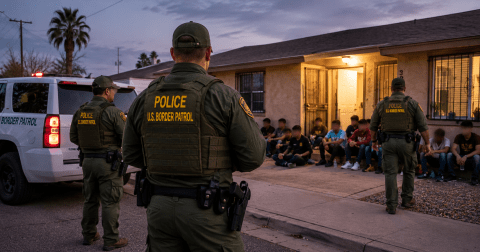
An operation against human trafficking in Laredo, Texas, ended with 18 arrests and the discovery of a house where 15 migrants were locked up and held against their will, according to local reports based on information from the Border Patrol in the Laredo sector.
The case began as a human smuggling attempt in a vehicle. Border Patrol agents detained three people during that initial intervention and, based on the subsequent investigation, They arrived at a safe house where they found another 15 people.. Authorities said they were inside the residence with no way to leave freely.
The operation once again puts the use of private homes as holding points on human trafficking routes on the southern border of Texas. In these cases, migrants are not always just transferred: many times they remain overcrowded, confined, threatened or exposed to dangerous conditions while the traffickers try to coordinate the next leg of the trip.
You can see: Disappeared: the shadow of sex trafficking in Latin America
What happened in the Laredo operation
As reported Laredo Morning Timesthe operation occurred on May 13, 2026, after federal agents intercepted a vehicle related to an alleged human smuggling attempt. That first action left three people detained.
The investigation then led to a safe house near Laredo. There, authorities found 15 more people, who according to Border Patrol were being held against their will and locked inside the property. KGNS also reported that the investigation began with the detention of three migrants inside a vehicle and led to the discovery of the home.
Authorities did not release the names of those arrested, the exact location of the home or full details about possible charges. It was also not clear, with the information available, how many of the arrested people are being investigated as alleged traffickers and how many were in immigration custody after being found in the operation.
You can see: Six people found dead inside a train car in Laredo, Texas
Safe houses: the most susceptible side of human trafficking
The so-called safe houses, or stash homes, usually function as clandestine points where human trafficking networks hold migrants after crossing the border. or while waiting for transportation to other cities in the United States.
The term may sound administrative, but the reality is usually much harsher: closed homes, overcrowded people, lack of food, poor ventilation, constant surveillance and threats to prevent them from escaping or asking for help.
That is why it is important not to see these operations only as “immigration arrests.” In many cases, The people found in these houses may be victims of exploitation, extortion or illegal detention by criminal networks.
Laredo, a key point on traffic routes
Laredo is one of the most important border cities in Texas and a strategic corridor due to its location, its international bridges and its connection to routes such as I-35. This position makes it a frequent point of operations against human smuggling, drugs and clandestine transportation of people.
The discovery of the safe house also occurs in a week marked by other serious cases linked to human trafficking in the area. In another recent operation in Laredo, agents found 19 migrants, including an unaccompanied minor, hidden inside the compartment of a belly dump trailer; The driver was arrested for alleged human trafficking.
Also this week, the death of six migrants from Mexico and Honduras, including a 14-year-old teenager, found dead inside a railway container in Laredo, was investigated. Reuters reported that authorities are treating that case as a human smuggling investigation and that the victims died from heat stroke.
The risk for migrants
Authorities often present these cases as actions against illegal crossings and trafficking networks. But the human component is central: many people who pay coyotes end up trapped in alter systems that they do not managewithout freedom to decide when to move, where to stay or how to ask for help.
The Laredo case shows that gray and dangerous area. There were arrests, yes, but also people locked in a home. And that difference matters: behind an immigration operation there may be a criminal investigation against traffickers, but also possible victims who need protection, medical attention, translation, qualified representation and personal evaluation of their situation.
What the authorities recommend
The Border Patrol asked the community report suspicious activities linked to safe houses or human trafficking. In these types of cases, signs may include:
- Unusual movements in a home.
- Many people entering or leaving discreetly.
- Vehicles that arrive at night.
- Covered windows or people who appear to be under surveillance.
For immigrant communities, the message is also delicate: reporting a situation of confinement or exploitation can save lives, but many victims are afraid to call the authorities because of their immigration status. Apt assistance and immigrant rights organizations recommend seeking help from lawyers, community lines or local groups when there is a risk of trafficking, violence or holding against will.
The Laredo operation leaves a clear conclusion: safe houses are not just a border or police problem. They are places where migrant vulnerability It can turn into captivity.
Continue reading:
ICE raids: the states where arrests and fear among immigrants are growing
Texas tightens controls: why immigration arrests in May have another focus


