

By Armando Hernandez
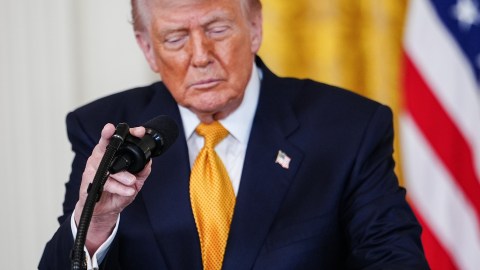
In a triumphalist way, Donald Trump assured this Wednesday that in Venezuela “they are dancing in the streets” due to the money that is entering the country from new oil investments promoted after the easing of sanctions and the rapprochement between Washington and Caracas.
During an event at the White House, Trump stated that the Venezuelan energy sector is experiencing renewed interest from large American companies.
“People in Venezuela are dancing in the streets because a lot of money is coming in”said the president when referring to the oil agreements reached in recent months.
The Republican added that he held a private dinner with executives from the major oil companies in the United States, including Chevron and ExxonMobil, to discuss business opportunities in the South American country.
HoweverAccording to a recent report in The New York Times, the information portrays a Venezuela divided in two after the kidnapping of Nicolás Maduro by the United States.: on the one hand, a political and business elite that celebrates a supposed economic recovery driven by oil and openness to foreign investments; on the other, an exhausted population that remains trapped in poverty, fear and repression.
Although the new scenario has brought signs of opening, such as the release of hundreds of political prisoners and the return of investors, the newspaper questions the idea of a true “renaissance.”
However, Trump’s statements come amid a growing openness to foreign investment in the Venezuelan energy industryhistorically affected by sanctions, nationalizations and operational deterioration.
ExxonMobil CEO Darren Woods recently confirmed that the company is evaluating new opportunities in Venezuela following regulatory changes promoted by the interim government headed by Delcy Rodríguez and supported by the Trump administration.
Despite this, Woods had maintained a much more cautious stance until a few months ago. In January, he described Venezuela as an “uninvestable” country (“not suitable for investment”) due to the lack of legal guarantees and a history of expropriations.
According to the Reuters agency, Trump met this week with executives from Chevron and ExxonMobil to discuss the Venezuelan energy future and possible large-scale investments and although the official discourse from Washington has been optimistic, Several oil companies maintain reserves on the Venezuelan scene.
In previous meetings at the White House, sector executives warned that fully recovering Venezuelan oil production would require structural reforms, political stability and billions of dollars in investment.
According to estimates cited by Fortune, Rebuilding the Venezuelan energy industry could require more than $100 billion and more than a decade of work.
Keep reading:
· Why is the United States intervention in Venezuela not justified?
· Military deployment does not provide long-term security
· Concern over treatment of undocumented children in ICE detention centers


