
In October 2016, Japanese biologist Yoshinori Ohsumi received the Nobel Prize in Physiology or Medicine for his discoveries about the mechanisms of autophagya process by which cells break down and recycle their own damaged or unnecessary components.
The word comes from Greek: car (oneself) and phagein (eat). In a few weeks, the term jumped from molecular biology laboratories to the headlines of lifestyle, diet and well-being magazines, almost immediately linked to the phenomenon of intermittent fasting.
Currently, this cellular process is a matter of debate, with some overestimating the health benefits and other specialists discrediting it. The discussion is such that it has transcended medical offices to sneak into social networks, where pseudo-experts have the nerve to give their opinion categorically, without scientific evidence.
Definitely, autophagy is a precise, proven and most essential cellular mechanism for life. The scientific debate is not whether it exists, but whether intermittent fasting activates it in a relevant way in humans and whether that translates into concrete clinical benefits.
From cell to plate
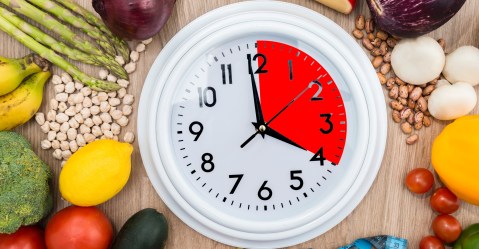
Intermittent fasting groups different eating protocols that alternate periods of intake with periods of abstinence: the 16:8 model (sixteen hours of fasting and eight of feeding), the 5:2 protocol (five normal days and two of severe calorie restriction) or 24-hour fasting are the most popular.
The promise that unites them is seductive: if the body does not receive food for a certain time, it activates autophagy and, with it, a kind of cellular “deep cleaning” with rejuvenating, anti-inflammatory and even anti-cancer effects.
Millions of people around the world have adopted these practices. According to data from Google Trends, searches for “intermittent fasting” increased more than 400% between 2016 and 2023. Books, mobile apps, influencers, and health clinics have built entire industries on this promise.
What the evidence says
Autophagy was initially described in model organisms such as yeast and mice. In these contexts, its activation through nutrient restriction showed notable effects: greater longevity in worms and flies, reduction of inflammatory markers, elimination of misfolded proteins associated with neurodegenerative diseases such as Alzheimer’s or Parkinson’s, and suppression of certain types of tumors in early stages.
In humans, research confirms that autophagy is activated during fasting, intense physical exercise, and under conditions of metabolic stress. Observational studies and some clinical trials suggest that intermittent fasting can contribute to weight loss, improve insulin sensitivity, reduce inflammatory markers and promote cardiovascular health in certain patient profiles.
Fasting from 0 to 12 hours. The body uses liver glycogen. There is still no robust evidence of active autophagy.
Fasting from 12 to 18 hours. Onset of mild ketosis. Molecular signals of autophagic activation detected in animal models.
Fasting from 18 to 24 hours. Greater autophagic activation reported. Difficult to measure directly in human tissues.
Fasting for +24 hours. More pronounced effects, but also greater risk of loss of muscle mass.
8 affirmations under the magnifying glass
Myth 1: “Skipping breakfast activates autophagy immediately and cleanses the cells.”
Reality: Autophagic activation requires at least 12-16 h of fasting according to available data. It doesn’t happen with skipping a meal.
Myth 2: “Intermittent fasting cures cancer by activating autophagy.”
Reality: The autophagy-cancer relationship is paradoxical: it can suppress tumors in early stages, but also favor their survival in advanced stages.
Myth 3: “Anyone can and should practice intermittent fasting.”
Reality: It is contraindicated in pregnant women, people with eating disorders, unsupervised type 1 diabetics and minors.
Myth 4: “Ohsumi’s Nobel Prize validates intermittent fasting as a healthy practice.”
Reality: The Nobel recognized the discovery of the biological mechanism, not a specific diet. Ohsumi himself has urged caution against commercial extrapolation.
Experts point out that there is solid evidence in model organisms and promising data in humans, but it is not yet possible to say with certainty what duration, frequency or type of fasting maximizes autophagy in different human tissues, or whether that necessarily translates into better health.
A precise process, a practice that requires nuances
Autophagy is one of the most fascinating and fundamental processes in cell biology. Its role in homeostasis, aging and disease is indisputable. However, the distance between that molecular reality and the promise that fasting sixteen hours a day “cleanses your body and lengthens your life” is still truly extensive.
Intermittent fasting can be a useful tool for certain people, under supervision and with clear goals. But presenting it as a long-established lever of health, based on a simplified reading of Ohsumi’s Nobel Prize, is an exercise in reductionism that the available evidence does not support.
The recommendation of the right scientific consensus is clear: before adopting any fasting protocol, consult with a health professional, know the contraindications and do not expect miracles from autophagy that science has not yet confirmed.
You may also be interested in:
· Why do we feel tingling in our extremities?
· Eliminates kidney stones in a pure way
· Drinking warm water, an ancient habit turned viral trend


