
The United States government published the National Drug Retention Strategy 2026, an ambitious federal plan that combines security actions, public health and international cooperation to confront the fentanyl and drug consumption crisis.
The document, prepared by the Office of National Drug Retention Policy, outlines a comprehensive response to reduce both the supply and demand of illicit substances. According to the report, this strategy “coordinates the government’s efforts to reduce drug availability and consumption.”
President Donald Trump stressed the seriousness of the crisis, especially due to the impact of fentanyl: “One of the most serious threats to American lives today is the fentanyl crisis,” which has caused “unimaginable suffering to countless families.””.
Frontal war against cartels and drug trafficking
The strategy proposes a direct offensive against transnational criminal organizations. “The generation of containment has failed… we will pursue the cartels, dismantle their laboratories and cut their supply chains,” the report states.
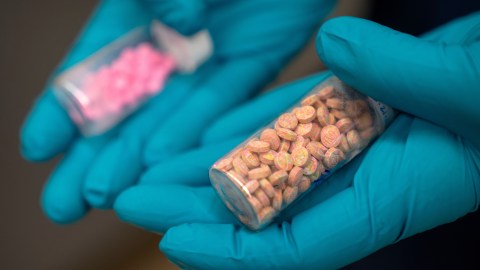
This approach aligns with recent government actions, such as the designation of cartels as terrorist organizations and federal operations that have achieved massive drug seizures, as an example, cites that in a recent operation, authorities seized 900,000 fentanyl pills and made 146 arrests, reflecting coordination between agencies.
In addition, the strategy emphasizes keeping a watch on chemical precursors and new threats. Health authorities have warned about the presence of substances such as medetomidine in illicit fentanyl, the detection of which has increased drastically in recent years.
The opinion also places emphasis on public health policies. “We must prevent consumption before it starts and offer treatment as soon as possible,” indicates the document. This includes expanding access to medications such as naloxone, educational campaigns, and recovery programs.
Fentanyl crisis: from public health to national security
The 2026 strategy reinforces the vision of fentanyl not only as a health problem, but as a threat to national security. In this context, the government has raised the level of institutional response and international coordination to stop trafficking from countries like Mexico and the flow of precursors from Asia.
Over the past decade, the crisis has reached critical levels, with more than 100,000 overdose deaths annually at its peak, many related to synthetic opioids.
The director of the ONDCP described the strategy as a national commitment: “It is not just an opinion, it is a promise to families who have lost their loved ones.” He added that the objective is clear: “Our objective is not to manage the crisis, it is to win.”
The document concludes with a call for political and social unity to confront the problem: “This cannot be a partisan issue; it must be an American mission.”
With this strategy, the United States seeks to consolidate a more aggressive and coordinated approach to the drug crisis, combining security actions with public health policies to contain one of the country’s largest emergencies in recent decades, as cited in the document.
Keep reading:
– An American woman who tried to cross an arsenal to Mexico in her vehicle is arrested in Arizona.
– The US sanctioned 23 people and companies for supplying chemicals to the Sinaloa Cartel.


