

By Ramon Castro
The automotive world is entering a stage where the boundaries between industries are beginning to blur. Companies that until recently were associated with domestic technology now dare to imagine vehicles that look like they came from an aerospace laboratory.
Read also: The Porsche 911 GT3 could make the leap to a big turbo
That is the case of Dream Abilitiesa company known for its smart vacuum cleaners and cleaning robots that now wants to make noise in the world of supercars. His proposal is neither discreet nor conventional.
You can search for: Hyundai bet the impossible on the IONIQ 9 2027
A concept that seems like science fiction
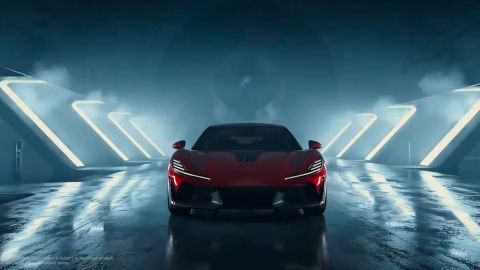
The project is called Dreame Nebula Next 01 Jet Model and its approach breaks with everything usual. The vision is to create a vehicle capable of reaching extreme levels of acceleration using an aviation-inspired turbine system.
The brand presented it as part of its event Dreame NEXT 2026where he also showed other technological advances. However, this model was the one that generated the most attention due to its radical and unusual approach in the automotive industry.
The concept includes a propulsion system based on turbines that would run on solid fuel, leaving out traditional options such as gasoline or diesel. Although technical information remains limited, the promise is ambitious.
According to preliminary data, the vehicle could have up to 1,876 horsepower combining its electrical systems with the thrust of the turbines. Estimates even speak of acceleration from 0 to 60 mph in 0.9 secondsa figure that has not yet been verified in real conditions.
Between the laboratory and the track
This is not Dreame’s first approach to the world of automobiles. The imperfect project was initially shown at CES in Las Vegas 2026although without the fully integrated turbine system. Now the challenge is to convert that concept into something functional and coherent.
Another of the most striking points is the theoretical thrust of the system, which could reach up to 100 kilonewtons with extremely fast response times. The combination sounds closer to aviation than traditional automotive.
Comparisons have already begun to arise. The ThrustSSC, considered the fastest land vehicle in history, reached 758 mph thanks to rocket-type engines. In that context, the Nebula Next 01 Jet Model aims for figures over 500 mph, at least in projection.
For now, everything remains conceptual. There are no official tests or fully functional prototypes with the integrated turbine system. But the simple fact that a company born in the world of cleaning is proposing something like this already says a lot about the moment the industry is experiencing.
Continue reading:
Mitsubishi recalls more than 100,000 SUVs due to a fault
Ford went too far: it has the fastest electric vehicle in the world
Toyota’s secret to making solar cars viable


