
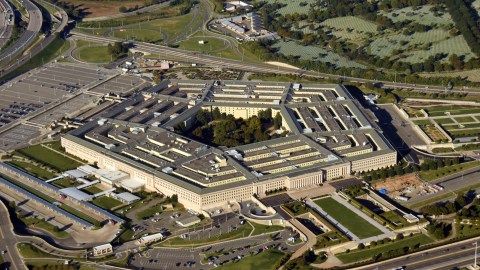
Google would have taken a step that reignites the discussion on AI, defense and ethical limits with a agreement with the Pentagon so that its models can be used in classified environmentsa decision that would already be generating discomfort among company employees. The movement is also quite reminiscent of the route that Anthropic had followed until recently with Claude in uses linked to government and national security.
Google enters more fully into defense
The report points out that Google would have agreed to put its AI at the service of the Pentagon’s classified networkswhich opens the door to sensitive tasks within the American security apparatus. In simple terms, this does not mean that AI “reads secrets” on its own, but rather that it could operate within systems where classified information circulates and support analysis, classification or technical assistance processes. that jump It changes the conversation quite a bit about the role of big technology in defense.
The news also matters because Google is not just any company in this field. For years it has tried to present itself as a company focused on mass products, consumer and cloud, but it is increasingly being pushed towards high-level government contracts. And when this expansion touches a classified topic, the debate stops being just commercial and becomes political, ethical and reputational.
Agreement with the Pentagon generates discomfort within Google
The most striking thing about this case is not only the agreement, but the internal reaction. Several employees expressed discomfort due to the possibility that the company’s technology ends up associated with military or intelligence uses, especially in a context in which AI already raises questions about surveillance, automation of decisions and possible abuses. This is not a minor criticism.: For part of the non-public, the problem is not working with the government, but crossing a line that they consider too delicate.
This discomfort recalls previous episodes in the industry, such as internal protests that Google faced in other stages of collaboration with the defense sector. The difference now is that the conversation is happening at a much brighter time, because generative AI is no longer a future promise: it is a powerful, fast tool and increasingly integrated into critical workflows.
Does Google want to replace Anthropic?
The comparison with Anthropic makes sense because Claude had also been used in government and security settings, albeit with public attempts to put limits on certain uses. That detail is key: it’s not just about who sells the technology, but what kind of tasks does it allow and under what conditions. In both cases, the sticking point is access to rich information and the possibility of advanced models working within state-controlled environments.
The difference, at least in the speech, is that Anthropic had tried to set clearer restrictions on military applications especially delicate. Google, on the other hand, with this agreement, appears much more willing to fully immerse itself in the defense ecosystem, even if that brings it internal criticism and external doubts. And of course, in a market where OpenAI, xAI and other actors are also looking for spaces in the public sector, staying out does not seem like a very realistic option either.
This is not just a contract being discussed. The future of the relationship between colossal tech and the United States military apparatus is discussed. For the Pentagon, having access to top-of-the-line AI models means gaining speed, analytical capabilities, and strategic advantage. For Google, it means opening a new business avenue, gaining institutional weight and not falling behind its rivals.
But the reputational cost can be high. If a significant part of the workforce believes that the company is moving towards terrain that is incompatible with its values, internal tension can grow. And if you add to that the public perception that AI is increasingly entering military areas, the result is a much more complex image than Google usually wants to project. The big question It is no longer whether artificial intelligence will reach the heart of defense, but rather how far the companies that build it are willing to go.
In the end, this agreement reinforces a fairly clear idea and that is that The border between commercial AI and military use is rapidly blurring. And Google, whether it likes it or not, has just gotten much closer to that line.
Keep reading:
• The Pentagon estimates that the war with Iran has cost $25 billion so far
• The Pentagon requests nearly $55 billion to reinforce its military offensive with drones
• The Pentagon asks Congress to formalize the name change of the Department of Defense


