
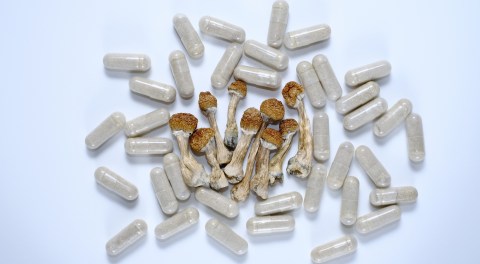
The Food and Drug Administration (FDA) announced an expedited review of three new psychedelic drugs intended to treat depression and post-traumatic stress disorder (PTSD). This decision is framed within an executive order signed by President Donald Trump to facilitate access to these treatments.
The FDA granted priority review vouchers to two companies investigating the psilocybinthe active ingredient in hallucinogenic mushrooms, and a third company studying the methylonerelated to MDMA, refers Associated Press (AP).

Although vouchers do not guarantee approval, they allow for a significant reduction in review time, from months to weeks.
FDA Commissioner Marty Makary told NBCNews that, thanks to the priority voucher program, the agency could approve the first psychedelic drug by the end of the summer.
Political and public support
Support for psychedelic treatments is increasing, especially among war veterans and followers of the “Manufacture America Healthy Again” (MAHA) movement.
These drugs have been promoted by public figures such as Secretary of Health Robert F. Kennedy Jr., who has expressed his intention to make these substances available for psychiatric conditions that are difficult to treat in the short term.
The influence of personalities like Joe Rogan, a podcast host who attended the event in the Oval Office where Trump signed the executive order, has become essential in promoting the psychedelic agenda. Rogan has discussed ibogaine extensively on his show and said he received a quick and positive response from Trump regarding its potential for treatment.
Dr. Peg Nopoulos, head of the department of psychiatry at the University of Iowa, also expressed her satisfaction at seeing that this type of research is being promoted. He expressed to NBCNews that psychedelics are “powerful drugs,” but he has seen how they save lives. “However, I am a scientist and we cannot approve a drug without understanding who will benefit from it, who will not and what the risks are.”
Criticisms and concerns
Despite the progress, some Democratic lawmakers have expressed concern about the White House’s intervention in the distribution of the vouchers to specific companies. Critics of the program say it was implemented without consulting Congress and could ultimately undermine confidence in the FDA’s regulatory process.
The FDA has also begun evaluating a drug related to ibogaine to treat alcohol use disorder, although its use is under debate due to associated cardiac risks.
A new horizon in research
The recent openness to psychedelics reflects a significant change in the attitude of the government and the pharmaceutical industry.
For years, research on these substances was limited by their classification as high-risk drugs, but a growing number of companies are beginning to explore their therapeutic potential with financial and investment support.
Possible side effects of psychedelic drugs
Psychedelic drugs such as psilocybin, MDMA and LSD, used in assisted therapies for depression and post-traumatic stress disorder (PTSD), generally have mild to moderate and transient side effects, according to clinical reviews. These usually disappear when the effects of the substance end or the next day. The most reported ones include:
- Nausea and dry mouth.
- Acute anxiety, nervousness either emotional discomfort (known as “bad trip”).
- Increased blood pressure either heart rate, excessive sweating and muscle tension.
- Mild psychotic symptoms as pseudohallucinations (where the person knows they are hallucinating), jaw clenching, headaches either blurred vision.
- In MDMA specifically for PTSD: decreased appetite, shivers, concern and uncontrolled eye movements.
have not been reported serious adverse effects nor grade 3/4 events in controlled studies, and are generally well tolerated by participants under supervision.
Less common risks or in vulnerable populations
Although rare in controlled clinical settings, certain risks include:
- Temporary worsening of depressive symptoms (4.75%), anxiety (13.1%), problems of memory either concentration (14.6-14.7%).
- In vulnerable people: possible precipitation of psychotic episodes either maniacs, panic either disorientation.
- For MDMA: temperature rise, dehydration and interactions with antidepressants.
- Use without medical supervision may aggravate problems, such as chronic psychiatric symptoms.
Profits are maximized with psychotherapy combined, and low organic toxicity It is a plus point.
General considerations
The evidence is promising, but unclear in terms of long-term security; studies emphasize rigorous clinical contexts. Always consult a health professional before any treatment.
Key points
- Mostly mild effects: Nausea, anxiety, physiological changes; the serious ones are rare.
- Context dependent: Better results in assisted therapies.
- Vulnerable populations: Increased risk of psychosis or mania.
You may also be interested in:
· Historical reclassification: state-licensed medical marijuana is considered a less dangerous drug
· What’s behind the psychedelics review? How this can change the way you view conditions and medications
· Nicotine pouches are promoted by influencers without mentioning health risks


