
Tension in the Middle East escalated again after an incident in the strategic Strait of Hormuzwhere Iranian forces opened fire on an oil tanker and reimposed restrictions on maritime traffic, in response to the US blockade.
According to information from the UK maritime trade operations centre, cited by Reuters, two Iranian Revolutionary Guard patrol boats They shot at a ship that was transiting through the area. Although no injuries or serious damage were reported, the incident raised alerts in international trade.
The Strait of Hormuz is one of the most sensitive and important routes in the world, since About 20% of the world’s oil circulates through it.. Any interruption directly impacts energy markets and international economic stability.
The AP agency reported that Iranian authorities confirmed that the administration of the maritime passage returned to the hands of its armed forces. The head of the National Security Commission of Parliament, Ebrahim Azizi pointed out that the strait returns to its “previous state”which implies that boats must request authorization to cross and even pay tolls.
“If the (American) maritime blockade is maintained it will be considered a violation of the ceasefire and transit through the Strait of Hormuz will be closed,” indicated the Fars and Tasnim agencies.
This decision originated in response to tightening of US measuresled by President Donald Trump, who has maintained a blockade of Iranian shipping and ports as part of his pressure strategy.
According to reports from maritime monitoring platforms such as TankerTrackers.com, several ships, including a supertanker, were forced to change route after the attack, evidencing the immediate impact on global logistics.
The episode occurs just hours after the Iranian foreign minister, Abbas Araghchi will announce the opening of the strait within the framework of a fragile regional ceasefire. However, the decision to restrict the passage again reflects the volatility of the conflict.
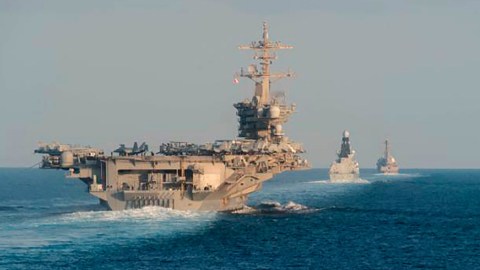
Experts warn that the Strait of Hormuz has become a key pressure point for Iranwhich seeks to negotiate from a position of strength against Washington. For its part, the United States has reinforced its military presence in the area to guarantee free navigation.
Although the ceasefire between both nations remains in place, the constant changes in the situation generate uncertainty about its duration. Analysts agree that Any escalation could have global consequences, especially in oil prices.
The current scenario makes it clear that stability in the Strait of Hormuz remains fragile and that any incident, no matter how minor it may seem, can trigger a larger-scale conflict.
Trump gives an immediate response
Shortly after the Araqchí announcement, Trump announced that his country will maintain the naval blockade of ships to enter or leave Iranian ports until there is an agreement, which he ordered after the failure of last weekend’s talks in Islamabad.
“The Strait of Hormuz is completely open and ready for trade and free transit, but the naval blockade will remain in full force and effect As far as Iran is concerned, only until our negotiation with Iran is 100%,” he wrote on his Reality Social account.
Hours earlier, he warned that he might not extend the ceasefire with Iran if a peace agreement to end the conflict is not reached by Wednesday.
“Maybe I won’t extend it. So we have the blockade and, unfortunately, we will have to drop bombs again,” the Republican concluded.
Keep reading:
- Why the Strait of Hormuz is strategic and how Iran has used it as a pressure tool
- What is happening with the agreement reached by the US and Iran for a ceasefire


