
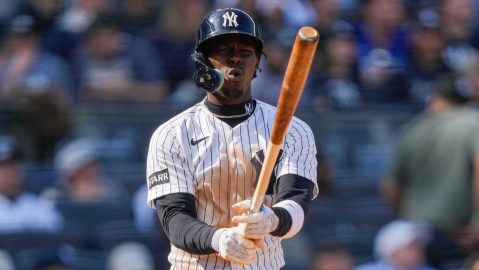
The Major Leagues recorded an increase in representation of African American players in their squads at the start of the 2026 season, a fact that marks a recent trend within the league. According to official figures, The percentage reached 6.8%, exceeding the records of the previous two years.
The data includes active players on opening day rosters, as well as those on injured and restricted lists. In 2025, the proportion had been 6.2%while in 2024 it stood at 6.0%, confirming a sustained increase for the second consecutive year, something that had not been seen in at least two decades.
The 0.6 percentage point increase over the past year represents the largest single-season growth since period between 2017 and 2018, when a variation of 0.7% was recorded.
Player development and profile programs
Part of this growth is linked to initiatives promoted by the league itself to encourage the participation of new talents. According to the data released, 20 of the 64 African-American players present on the squads have been part of programs such as the MLB Youth Academy, the Step forward Series, the DREAM Series, Nike RBI or the Hank Aaron Invitational Tournament.
These platforms seek to expand access to organized baseball and strengthen the training of young baseball players, which is reflected in the actual composition of the group. Among the registered players, 22 are 25 years old or younger, while eight are over 32 years old.
The average age of this group is 27.8 years, slightly below the league’s regular average, which is 29.25 years.
Presence in minor leagues and historical evolution
In addition to the players in the Major Leagues, The MLB reported the inclusion of 17 African-American players assigned to minor leagues within the 40-player rosters at the beginning of the season. Of that group, seven also participated in development programs organized by the league.
One of the cases mentioned is that of the gardener Blake Perkinswho was promoted to the Milwaukee Brewers on March 26.
Despite the recent increase, historical data shows a significant difference compared to previous decades. The Institute for Diversity and Ethics in Sports at the University of Central Florida documented that the percentage of African American players reached 18% in 1991, when their reporting began.
The current figures reflect a slight recovery in representation within the squads, in a context where the league continues to implement strategies to diversify its roster of players.
Keep reading:
· Miguel Rojas, focused on a three-time championship for the Dodgers
· Fernando Valenzuela to Forty five years of Fernandomania: the intimate legacy that his son revealed
· Shohei Ohtani breaks records: the richest MLB player and symbol of the global baseball business


