

By Samuel Gonzalez
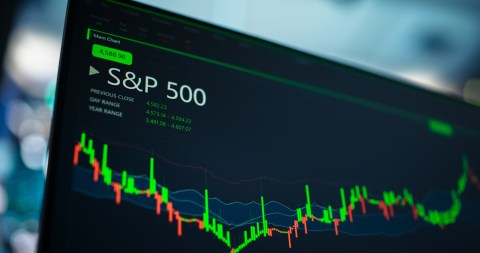
The US stock market managed to close the week with gainsin an environment marked by constant international tensions and economic fears. The S&P 500 advanced driven by a fragile ceasefire agreement between the United States and Iran, which gave a momentary respite to investors who had been reacting cautiously to the conflict.
For the start of the day this Friday, the S&P 500 rose slightly 0.2%while Nasdaq posted a stronger 0.7% gainsupported by the good performance of technology companies, especially in the semiconductor sector. In contrast, The Dow Jones fell 0.2%, equivalent to 103 points.
Despite this mixed behavior, the week was positive. The S&P 500 accumulated an increase of close to 4%its best performance since May. The Dow added more than 3% and the Nasdaq is aiming for an increase of approximately 5%. This rebound is largely explained by the temporary relief following the announcement of a two-week truce in the conflict with Iran.
However, optimism is not total. Inflation remains one of the main concerns for the markets. The most recent report from the Bureau of Labor Statistics (BLS) showed that Consumer prices rose 3.3% in March at an annual ratein line with expectations. In monthly terms, the increase was 0.9%driven mainly by the increase in energy prices, a result of the war with Iran.
The most relevant information is in the details: Energy prices soared 10.9% in Marchthe largest increase in years. Gasoline, for example, rose more than 20%reflecting the direct impact of the conflict in the Middle East and the closure of the Strait of Hormuz, a key route for oil.
“Since the Hormuz hotspot was closed for an extended period, we should expect one or two high inflation reportsdriven by transportation services and some durable goods categories,” Jeffrey Roach, chief economist at LPL Financial, told CNBC. “Second-order effects will likely add another 0.2% in the coming months. “The Federal Reserve is on pause for the next few meetings.”
The impact of the conflict is also reflected in oil prices. West Texas Intermediate (WTI) crude remains above $98 per barrelwhile Brent exceeds $96 dollars. Although prices have stabilized, uncertainty over the full reopening of the Strait of Hormuz continues to generate volatility.
Despite the truce, President Donald Trump continued with his threats on social networks in the event that Iran applies charges to oil tankers transiting the region.
“They better not be doing it and, if they are, they better stop now!” the president warned through his Truth Social account.
Meanwhile, the conflict in the Middle East continues to generate tensions and uncertainty. Israel has been singled out for carrying out attacks in Lebanon, which has been interpreted as a violation of the ceasefire agreement. This adds pressure to an already unstable environment. Volatility will continue to be present in the markets, there is no doubt; The compass will determine whether the conflict stops or resumes.
You may also be interested in:
- Costco: April’s best new products
- What happens if you withdraw more than $5,000 from your bank account
- Burger King seeks to hire 60,000 workers: how much does it pay
- Social Security payments in April: the good and the bad you should know
- Social Security bankrupt? What workers fear versus reality


