

By Armando Hernandez
The White House projects an optimistic economic outlook for 2026, despite the geopolitical impact of the war with Iran. However, recent indicators and independent analyzes paint a more moderate and even uncertain scenario.
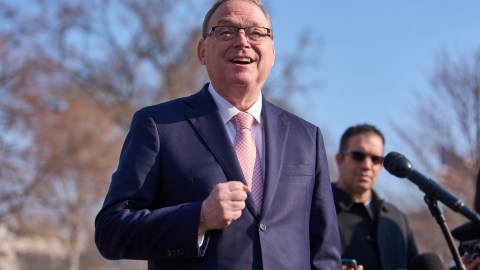
The chief economist of the US government, Kevin Hassett, assured that the US economy will maintain “solid” growth of between 4% and 5% in 2026. In an interview with Fox Trade, he stated: “I think (the war) is a temporary distraction that will go away very, very quickly.”
Hassett maintained that even with the conflict, which began on February 28 with the participation of the US and Israel, the economy will resume its course: “We will get back on track to live one of the best years in history.”
BARTIROMO: We know we staunch got right here off of the worst quarter for shares in several years, we know oil costs hold risen 50%. What’s your expectation to your impact on economic boost?
HASSETT: I non-public right here’s a brief-term distraction that can very very quickly go away pic.twitter.com/IOn2wjQAOx
— Aaron Rupar (@atrupar) April 9, 2026
Furthermore, he noted that the positive reaction of the markets after a temporary ceasefire with Iran would confirm this expectation of recovery.
Although the markets reacted positively to the announcement of negotiations between Washington and Tehran, specialists warn that these rebounds may be temporary.
However, recent figures from the Bureau of Economic Analysis (BEA) show a clear slowdown. According to the organization: “The US economy expanded 0.5% at an annualized rate in the last quarter of 2025.”
This data contrasts strongly with the 4.4% growth recorded in the previous quarter. In annual terms, GDP in 2025 grew 2.1%, below the 2.8% achieved in 2024.
The drop in the pace of expansion suggests that the economy was already facing a slowdown before the conflict with Iran impacted energy markets and supply chains.
In that sense, different analysts warn that the conflict in the Middle East has put pressure on strategic routes such as the Strait of Hormuz, key to the global flow of oil, and that any prolonged interruption could raise energy prices and affect inflation.
Various organizations such as the International Monetary Fund have indicated in recent reports that geopolitical risks are one of the main factors that could slow global growth. In that sense, External estimates place US growth in ranges closer to 1.5%–2.5% for advanced economies in contexts of international tension.
Keep reading:
- Hegseth calls offensive against Iran a “historic victory”
- The Pope’s criticism of Trump sparks controversy and the White House issues “warnings” to the Vatican
- Trump proposes creating a joint venture with Iran to collect tolls in the Strait of Hormuz


