

By Maria Luisa Arredondo
Finally the ball rolled. After weeks of tension, uncertainty and the latent specter of a boycott that threatened to tarnish the party, Mexico inaugurated its World Cup. The threats of the National Coordinator of Education Workers (CNTE), whose mobilizations and blockades sought to collapse the capital in protest of the non-compliance with federal agreements—particularly the repeal of the ISSSTE Law—kept the country in suspense. However, the blood did not reach the river. Thanks to an impeccable and highly efficient operational deployment by the government of Mexico City, the inauguration ceremony and access flowed without major incidents.
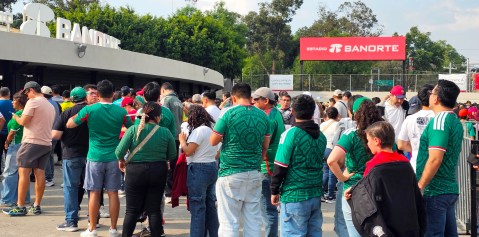
For the Mexican fans, the day was great. The party atmosphere that was felt in the streets was crowned on the field with a 2-0 victory against the South African team. A collective respite, a dose of euphoria necessary for a country that, at least for ninety minutes, wanted to forget everything.
But football is a temporary mirage; The reality of Mexico does not evaporate with a couple of goals.
Behind the stadium lights and the confetti, the pending issues of the State are still there, as alive and urgent as the day before:
Ignored social causes: The withdrawal of the CNTE is just a truce; Their demands persist. Added to these are the demands for justice from groups with deeply painful and justified causes, primarily the searcher mothers. While the government spends millions on the World Cup showcase, it has systematically refused to give them the support, resources and empathy they deserve in the search for their missing children.
Steam infrastructure: Tourists and locals who travel through the capital today encounter a patched-up city. The claims for unfinished works, carried out at forced pace and without due structural planning, are evident both in the deficiencies of the airport and in the day-to-day life of the Metro stations.
A first-world party built on the foundations of an infrastructure that is held together on pins and needles.
In conclusion, citizens today celebrate. It is valid and human to embrace the joy of a sporting triumph and the pride of being the epicenter of world football. However, Mexican society has demonstrated important maturity: it celebrates, but it does not forget. The tournament will pass, but the government’s debts with civil society will remain intact. The violence unleashed by organized crime continues to claim lives daily, complaints of corruption in the ruling class continue to accumulate with impunity and, above all, there remains the enormous pending task of thoroughly investigating the Morena politicians accused by Donald Trump’s administration for alleged complicity with drug trafficking.
This last omission is not a minor issue of internal politics; It is a time bomb that puts the continuity of the USMCA and the stability of the bilateral relationship at risk due to Trump’s threats to attack the Mexican cartels on the ground.


